SLCP Verification in Indonesia: A Complete Guide for Garment Factories & Exporters
Introduction
Indonesia is one of the world's leading textile and garment manufacturing countries, supplying apparel, footwear, and fashion products to globally recognized brands across the United States, Europe, Japan, and Australia. As international buyers continue to strengthen their responsible sourcing policies, compliance is no longer limited to product quality or delivery performance. Today, buyers also expect factories to demonstrate ethical labor practices, safe working conditions, and transparent social compliance data.
For many Indonesian manufacturers, completing multiple social audits for different buyers has traditionally been time-consuming, expensive, and operationally disruptive. Different brands often requested different audit methodologies, resulting in duplicated assessments, increased compliance costs, and audit fatigue.
To address this challenge, the Social & Labor Convergence Program (SLCP) was developed as a collaborative industry initiative that simplifies how factories collect and share social and labor compliance data.
For garment factories, textile manufacturers, footwear producers, and export-oriented businesses, SLCP Verification in Indonesia provides a standardized approach to validating labor and workplace information. Instead of undergoing numerous buyer-specific social audits, factories can complete one verified assessment that can be shared with multiple participating brands and business partners.
As sustainability, transparency, and responsible sourcing become key purchasing criteria, SLCP Verification is increasingly essential to Indonesia's export supply chain.
What is SLCP Verification?
The Social & Labor Convergence Program strives to ensure efficient coordination of social and labor assessments and audits throughout supply chains.
SLCP refrains from creating a certification. Instead, it established a method for factories to conduct their own social and labor assessments by collecting standardized data.
SLCP is not a certification program; it is imperative to understand its two-step process.
- Factories conduct the social and labor assessment.
- Factories submit the assessment to be verified by a third party.
Once assessments are verified, factories may share them with any supply chain stakeholders who wish to view them.
The goal of SLCP is to minimize the number of audits conducted by social and labor assessment stakeholders who are not part of the supply chain.
Instead of conducting individual audits, buyers may access the same, verified assessment conducted and submitted by the factory.
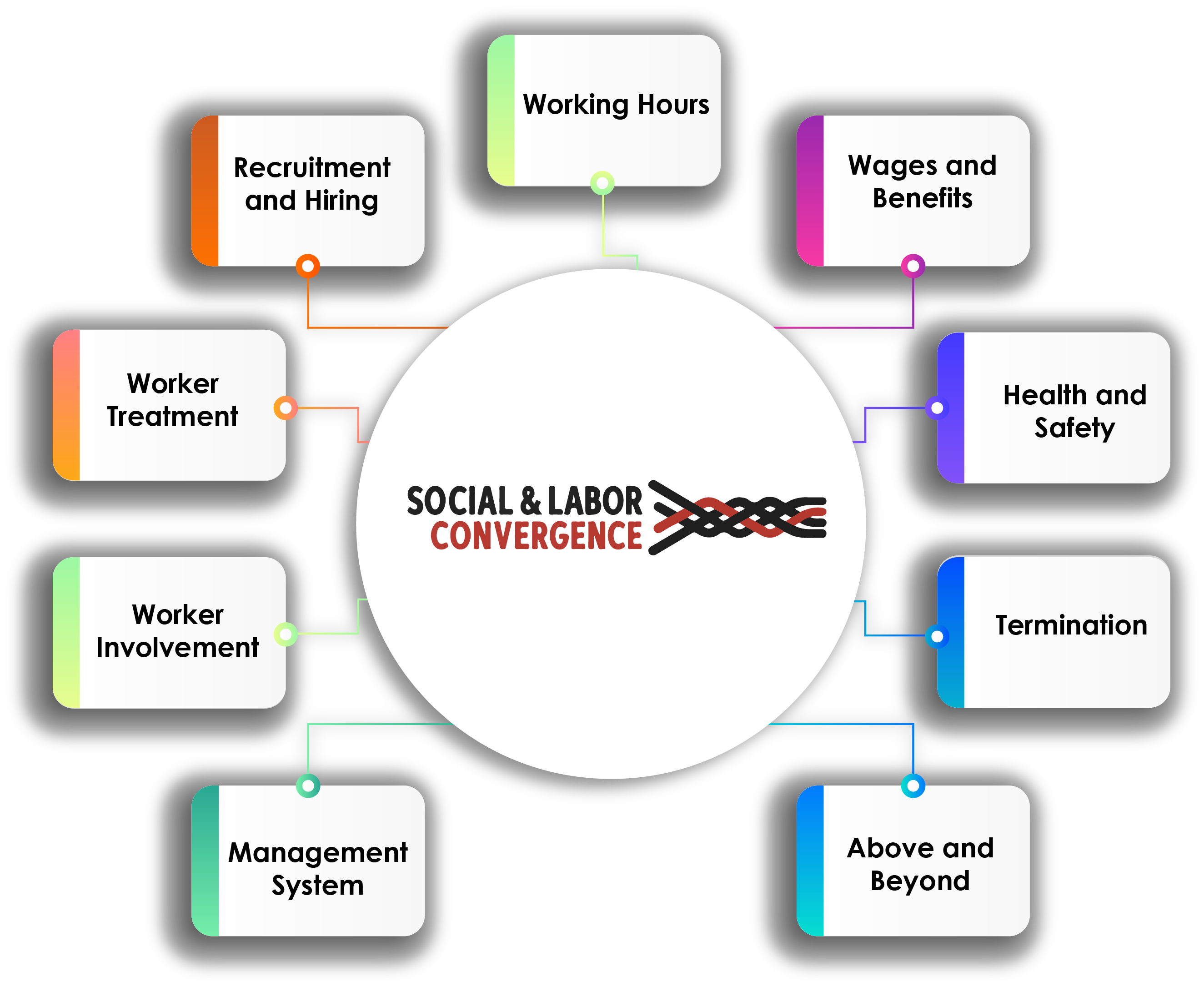
SLCP avoids classifying factories as good or bad. Rather, SLCP allows the verification of assessments of the various social and labor components shown in the following surveyed dimensions:
- Engagement with workers
- Treatment of workers
- Termination
- Health and safety
- Compensation and benefits
- Working hours
- Recruitment and hiring
- Management Systems
For factories in Indonesia, this framework replaces multiple overlapping audits with one consolidated, verifiable dataset.
Why SLCP Verification is Important in Indonesia
Indonesia has built a strong reputation as one of Asia's largest apparel and textile manufacturing centers. International buyers source millions of garments from Indonesian factories each year, making social compliance an increasingly important business requirement.
At the same time, the expectations of global brands have changed considerably.
Today, buyers want suppliers that can demonstrate:
- Responsible labor practices
- Safe and healthy workplaces
- Transparent working conditions
- Ethical employment policies
- Reliable compliance information
Without verified data, factories may be required to complete multiple social audits requested by different customers.
This creates several challenges, including:
- Increased audit costs
- Repeated factory disruptions
- Duplicate documentation
- More administrative work
- Reduced production efficiency
SLCP helps solve these problems by promoting a single standardized assessment methodology recognized by multiple participating organizations.
For Indonesian garment factories, this means less audit duplication and greater operational efficiency.
Why International Buyers Prefer SLCP-Verified Factories
Over the past decade, international brands have moved beyond simply checking whether a factory passes an audit.
Instead, buyers are asking:
- Can we trust the data?
- Is the information independently verified?
- Is the assessment standardized?
- Can multiple brands use the same results?
SLCP Verification helps answer these questions.
Instead of relying solely on different proprietary audit formats, brands can review standardized, verified information that provides a more consistent picture of factory performance.
For Indonesian exporters, this creates several commercial advantages:
- Increased buyer confidence
- Reduced audit fatigue
- Better transparency
- Improved supply chain communication
- Faster compliance reviews
While SLCP does not guarantee purchase orders, verified data often makes conversations with international buyers more efficient because reliable information is already available.
Who Needs SLCP Verification in Indonesia?
Although SLCP is widely associated with garment manufacturing, the framework is relevant for a broad range of export-oriented industries where social compliance is important.
Businesses that commonly benefit from SLCP Verification in Indonesia include:
- Garment factories
- Textile manufacturers
- Apparel exporters
- Footwear manufacturers
- Fashion accessories producers
- Home textile manufacturers
- Cut-and-sew facilities
- Contract manufacturing factories
- Private label production facilities
Factories supplying international fashion brands are among the most common users of the SLCP framework because buyers increasingly request standardized social compliance information.
How to Get SLCP Verified in Indonesia
1. Create an SLCP Gateway Account
The first step is to create a factory profile on SLCP Gateway to store your verified assessments. This is a free and necessary step to show your factory's digital compliance.
2. Complete the Self Assessment or a Joint Assessment
Using the tool, complete the Common Assessment Framework, which comprises 9 sections. For an easier option, first-time factories typically complete a Joint Assessment. This option is done with a partner's help.
3. Assessment by Approved Verifier Body
An SLCP Verifier Body will assess your documentation, perform an on-site visit, and conduct worker interviews to test the accuracy of your assessments. This visit must take place within 2 months of completing the self-assessment.
4. Review and Accept the Verified Report
A validated assessment report will be available on your Gateway profile for review and acceptance within 14 days of the on-site visit. You may dispute the report if you find any inaccurate statements. The factory will retain ownership of its data.
5. Use the Gateway Data
You can now present the verified report to any buyer that is linked to the SLCP Gateway or an Accredited Host system. You may present the report to more than one buyer at a time.
SLCP Verification Cost in Indonesia
| Facility Size | Estimated Cost |
| Small Factory | $1,500 – $3,000 |
| Medium Factory | $3,000 – $6,000 |
| Large Factory | $6,000 – $12,000+ |
Factors Affecting Cost
- Number of employees
- Facility size and number of production lines
- Existing compliance documentation and readiness
- Operational complexity
- Verification duration
- Quality and organisation of records
While there is an upfront cost, most Indonesian factories recover this through reduced spending on repeated buyer-specific audits over time.
Benefits of SLCP Verification for Garment Factories in Indonesia
As buyer expectations continue to evolve, SLCP Verification offers significant operational and commercial advantages for Indonesian manufacturers.
Rather than completing multiple social audits every year, factories can improve efficiency while providing standardized information to participating customers.
| Business Benefit | How It Helps Indonesian Manufacturers |
| Reduces Audit Duplication | One verified assessment can often replace multiple customer-requested social assessments, reducing disruption to factory operations. |
| Improves Buyer Confidence | Verified information increases trust among international brands, retailers, and sourcing organizations. |
| Saves Time & Resources | Fewer repetitive audits allow management teams to focus more on production and continuous improvement. |
| Enhances Supply Chain Transparency | Buyers receive standardized, independently verified social and labor data that supports responsible sourcing decisions. |
| Supports Responsible Sourcing | Demonstrates a commitment to ethical labor practices and transparency across the supply chain. |
| Improves Internal Management Systems | Preparing for verification often strengthens HR documentation, record management, and operational consistency. |
| Strengthens Global Competitiveness | Factories with verified social compliance data are often better positioned when engaging with international buyers. |
Guide for SLCP Verification in Indonesia
The right preparation helps the verification process run smoothly and quickly.
Factories should keep the following in mind during preparation:
- Assess all documents before submitting the assessment.
- Verify payroll, attendance, employment records, etc., are consistent and complete.
- Complete internal assessments of the conditions of the workplace.
- Complete checks to ensure health & safety equipment and emergency procedures are ready and fully functioning.
- Prepare division supervisors and department managers by providing them with the needed training on SLCP.
- Notify employees that they may be selected for verification and may participate in confidential interviews.
- Make sure records are complete and correct for the verifier.
- During the verification process, keep records organized and easy to access.
Verifying the SLCP systems is a one-time event. Instead, businesses should think of the SLCP as a management system.
Why Choose GSCS for SLCP Verification in Indonesia
Choosing the right verification partner directly affects how smoothly the SLCP process goes and how confidently buyers trust the resulting data.
GSCS International supports Indonesian factories with:
- Experienced compliance and social audit professionals
- In-depth knowledge of the SLCP framework and CAF modules
- Practical, hands-on support in completing the DCT accurately
- Transparent, no-hidden-agenda verification
- Reliable, responsive compliance support throughout the process
GSCS International works with garment, footwear, and textile exporters across Indonesia's major manufacturing hubs, including Jakarta, Bandung, and Central Java's Semarang–Surakarta corridor, helping them strengthen labor transparency and streamline SLCP verification from registration through to buyer data-sharing.
Conclusion
As global buyers increasingly standardize around shared compliance data, SLCP is becoming a practical necessity rather than an optional extra for Indonesian garment and textile exporters.
By replacing repetitive, buyer-specific audits with a single, verified, shareable assessment, SLCP helps Indonesian factories cut compliance costs, reduce production disruptions, and build stronger, more transparent relationships with international brands.
With professional support from GSCS International, factories across Indonesia can complete SLCP verification efficiently and stand out as trusted, transparent, and compliance-ready suppliers in the global market.
Frequently Asked Questions
SLCP Verification in Indonesia is an independent process that validates the social and labor data submitted by a factory through the Social & Labor Convergence Program (SLCP). The verified assessment helps international brands access reliable and standardized compliance information.
No. SLCP is not a certification standard. It is a standardized assessment and verification framework that helps factories collect and share verified social and labor data with participating brands and organizations.
SLCP Verification is suitable for garment factories, textile manufacturers, footwear producers, apparel exporters, home textile manufacturers, and other businesses supplying international brands that request standardized social compliance information.
The timeline depends on the factory's readiness, documentation quality, facility size, and the complexity of operations. Proper preparation can significantly reduce the overall verification time.
Commonly required documents include employee records, payroll data, attendance records, employment contracts, HR policies, health & safety documentation, working hour records, and management system documents.
SLCP provides a standardized framework for collecting and verifying social and labor data, while SMETA is an ethical audit methodology used by many brands to evaluate labor standards, health & safety, environmental practices, and business ethics.