How to Get C-TPAT Audit in Vietnam for Exporters and Supply Chain Security
Introduction
Vietnam is one of Asia’s fastest-growing export economies. Its businesses supply garments, textiles, electronics, footwear, and industrial goods directly to international buyers—especially in the United States.
Global trade continues to change rapidly.
Buyers now seek quality products, competitive pricing, and secure supply chains.
C-TPAT Audit in Vietnam grows more important for exporters.
If your company exports to the USA or works with American importers, understanding C-TPAT compliance in Vietnam helps strengthen your business. It reduces supply chain risks and improves buyer confidence.
Many Vietnamese exporters must now comply with C-TPAT.
C-TPAT compliance creates a strong competitive advantage.
This guide explains everything about C-TPAT Audit Vietnam: benefits, process, cost, requirements, and why businesses choose GSCS Vietnam for professional C-TPAT audit support.
What Is C-TPAT and Why Does It Matter in Vietnam?
C-TPAT stands for Customs-Trade Partnership Against Terrorism. The US Customs and Border Protection, part of the Department of Homeland Security, oversees this voluntary public-private partnership. The program began after the events of September 11, 2001, and aims to enhance the security of the international supply chain and protect US borders from smuggling weapons, illegal goods, and other threats.
C-TPAT is not compulsory for US importers, but, in practice, it is a requirement for those wishing to conduct business with American buyers in a productive way. C-TPAT certified importers enjoy a reduction of customs procedures and an overall streamlined and efficient customs process, as well as a favorable position at the US Port of Entry and access to the Free and Secure Trade (FAST) lane. All these advantages are a competitive edge in the US market.
Here is the most important thing that every Vietnamese factory must know: Vietnamese factories cannot become C-TPAT certified members. C-TPAT membership is limited to US based entities, importers, carriers, brokers, and (with a limited scope) manufacturers from Mexico and Canada. A factory in Ho Chi Minh City or Binh Duong cannot apply to CBP and request a C-TPAT membership number.
Vietnamese factories are expected to be C-TPAT compliant by US buyers. This shows that a factory's security practices align with the Minimum Security Criteria (MSC) set by Customs and Border Protection (CBP) for C-TPAT certified importers. If a US buyer achieves C-TPAT certification, then CBP holds the buyer responsible for ensuring their Vietnamese suppliers follow the same security standards. The buyer then passes this requirement to the supplier.
For Vietnamese factories, the typical process to confirm compliance with C-TPAT security practices involves undergoing a C-TPAT audit conducted by an accredited third party, such as GSCS Vietnam. Passing this audit allows the factory to demonstrate compliance with US buyers.
How U.S. Customs is Watching Vietnamese Supply Chains
C-TPAT compliance is a big deal in this environment, and here's why.
The U.S. Customs and Border Protection (CBP) has a forced labor policy in place. This policy presumes that any goods that have input from China's Xinjiang region, and other regions of China, that the United States deems made with forced labor, are prohibited from entering the United States. Until now, many Vietnamese factories, CBP enforcement has focused on indirect imports of Chinese cotton yarn, fabric, and other textiles. Between 2022 and 2025, many Vietnamese factories and businesses saw their apparel shipments to the United States detained by CBP.
In July 2025, a U.S.-Vietnam bilateral trade agreement introduced a 20% tariff on genuine Vietnamese goods and a 40% tariff on goods considered transshipped. In retaliation, Vietnam's Ministry of Industry and Trade announced increased inspections and penalties for origin fraud. CBP has now intensified its scrutiny of Vietnamese factories.
C-TPAT compliance doesn't directly address transshipment and UFLPA concerns, which are managed under different compliance areas. However, it signals to U.S. buyers and CBP that your factory maintains a transparent supply chain and has documented, audited security systems. In today's environment, a factory that completes a C-TPAT audit demonstrates serious compliance efforts, especially in regions where documentation and traceability matter most.
Who Needs a C-TPAT Audit in Vietnam?
C-TPAT is highly valuable for:
- Garment factories
- Textile manufacturers
- Freight forwarders
- Logistics providers
- Warehouses
- Export companies
- Packaging companies
- Shipping agents
If your products go to the USA, C-TPAT matters.
Why US Buyers Require C-TPAT Compliance from Their Vietnamese Suppliers
C-TPAT certification directly links to Vietnamese factory compliance through established commercial and regulatory requirements.
A US importer says a major American retailer or brand holds C-TPAT certification with CBP. As a condition of that certification, the importer has committed to CBP that all suppliers in its international supply chain meet C-TPAT Minimum Security Criteria. CBP periodically validates this through supply chain audits of the importer's operations.
If CBP finds that a certified importer's Vietnamese factory does not meet C-TPAT security standards, the importer risks losing its certification and all associated customs processing advantages. Key risks include slower border clearance, higher inspection rates, and operational disruptions throughout the supply chain. These factors make the threat of losing C-TPAT status both real and commercially significant.
TTo keep certification, US importers require Vietnamese suppliers to pass C-TPAT compliance audits and provide proof. This is a standard vendor contract term: meet C-TPAT criteria, allow audits, and submit documents when asked. Vietnamese factories supplying US brands now often face C-TPAT compliance requests. Those who promptly provide proof of compliance get approved faster and build stronger buyer relationships than those who do not.
Benefits of C-TPAT Compliance for Vietnamese Exporters
Attaining C-TPAT compliance delivers significant advantages for Vietnamese factories, offering more than just buyer satisfaction; it positions your business for success.
More Efficient Customs for Your US Buyers
Having C-TPAT compliance makes your buyers’ shipments from Vietnam move through customs more quickly and with fewer delays. This reduced processing time results in shorter lead times for delivery, faster payment cycles, and lower costs for buyers, giving them a competitive advantage over sourcing from non-compliant factories.
Less Shipment Detention
For US buyers with limited time for seasonal deliveries, a factory that is not compliant with a supply chain security initiative and C-TPAT has a higher risk for detention. Incorporating C-TPAT compliance into your factory’s operations will help with order volume and preferred supplier conversations.
Standing Out Among Competitors
Vietnam’s textile and garment industry is highly competitive. Factories with C-TPAT Compliance, as well as SMETA or WRAP Certifications, offer clear advantages to buyers. Large US brands increasingly favor suppliers who help them meet compliance requirements and reduce risk, making compliant factories more attractive business partners and improving their chances of being chosen during supplier consolidation.
Starting Point for Additional Security Programs
Many C-TPAT requirements overlap with other programs like ISO 28000, AEO, or WCO SAFE. Focusing on C-TPAT also strengthens security management for these initiatives.
Better Buyer Relationships
Trust comes from compliance. A buyer from the US that can prove their Vietnamese vendors are fully audited and compliant with CBP. A buyer like that is one with whom a business can build a relationship. Factory management teams that are aware of this use C-TPAT compliance as a strategic investment.
C-TPAT Compliance Audit Cost in Vietnam
Audit costs depend on factory size, operational complexity, the current state of security documentation, and whether pre-audit preparation support is required. The estimates below reflect realistic cost ranges for Vietnamese factories in 2025 and 2026.
| Factory Size | Estimated Audit Cost | Typical Duration |
| Small (up to 150 workers) | $1,500 – $2,800 | 1 day |
| Medium (150 – 500 workers) | $2,800 – $5,500 | 1 day |
| Large (500+ workers) | $5,500 – $10,000+ | 1 – 2 days |
These figures cover the compliance audit and report preparation. Costs for gap remediation — physical security upgrades, documentation development, staff training vary significantly based on the factory's starting position. Factories with existing security infrastructure and some prior audit history typically require less remediation than those starting from scratch.
Key Security Areas Covered in C-TPAT Audit
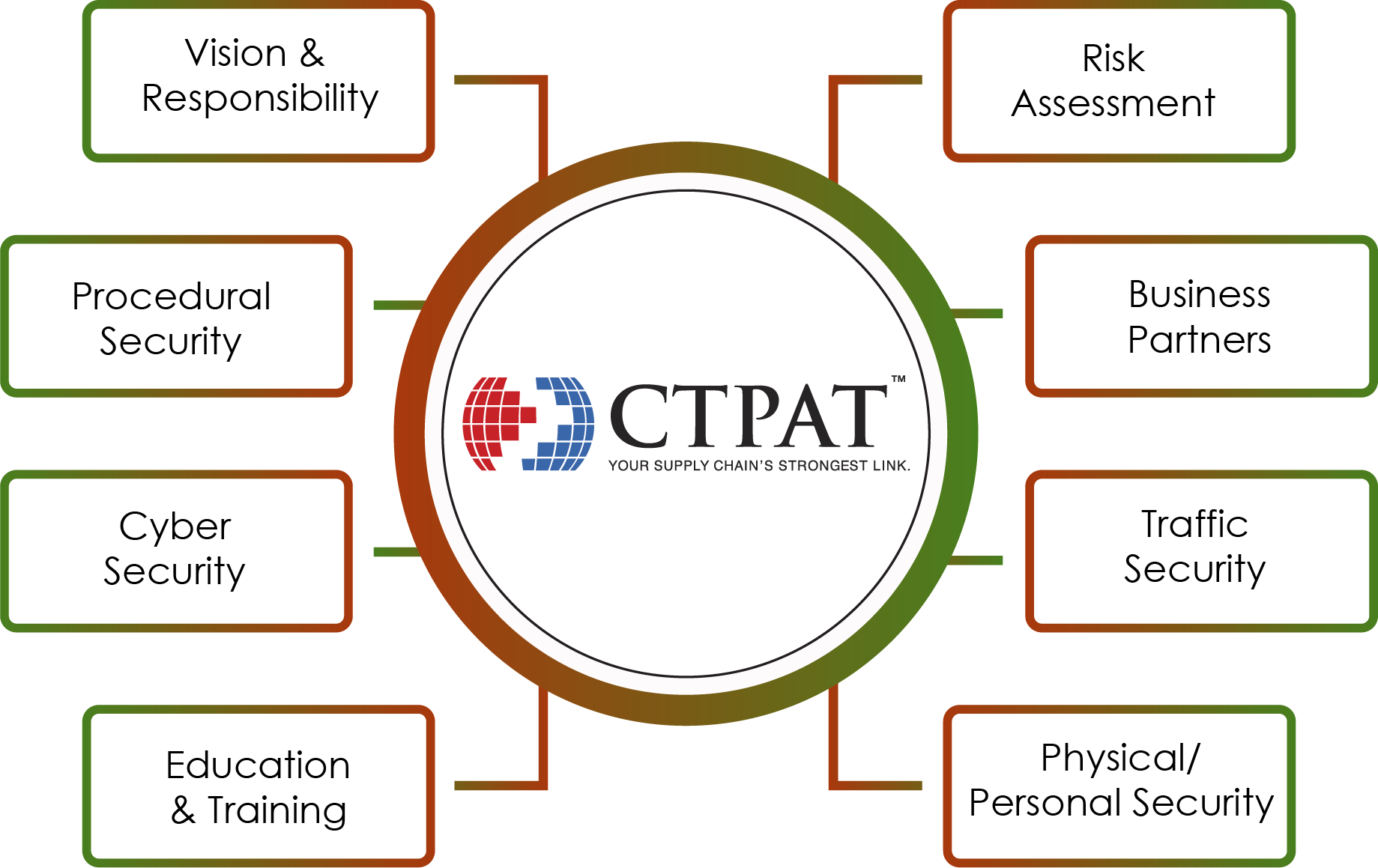
A C-TPAT audit is designed to assess a company's security practices and ensure compliance with international supply chain security standards. By evaluating key areas, the audit helps companies identify potential risks and strengthen their overall security posture.
Cargo Security: Ensures shipments are protected against tampering.
Facility Security: Protects buildings, production areas, and warehouse zones.
Personnel Security: Verifies hiring procedures and employee background checks.
Access Controls: Limits unauthorized entry to critical areas.
Procedural Security: Reviews shipping procedures and cargo handling.
IT Security: Protects business systems and sensitive data.
Business Partner Security: Evaluates supplier and logistics partner security.
Step-by-Step Guide to C-TPAT Compliance in Vietnam
The C-TPAT compliance process can come off as overwhelming to many Vietnamese factories and exporters. However, once you know what to expect, the process is really just a series of steps. Luckily, you can keep a business on track with a process and avoid wasting time with delays by knowing what the steps are.
Step 1: Know Your Buyers
The first step in the C-TPAT compliance process in Vietnam is determining the C-TPAT requirements or security requirements of the specific buyer. It is important to know that each buyer can set their own requirements or have their own checklists. GSCS Vietnam assists factories in understanding the requirements set by buyers so that factory security systems align with what is required.
Step 2: Security Self-Assessment
It is good practice for a factory to assess the security of its system prior to the formal audit. Additionally, a self-assessment of the security of the factory, the handling of cargo, the control of access by employees, the inspection of containers, and the security of information technology systems can be very helpful. It will also provide an opportunity to identify and address security gaps prior to the audit.
Step 3: Fill Security Gaps
After the self-assessment, the factory should fill all security gaps. This may involve better security of physical spaces, improved documentation, security, and control of the cargo, and enhanced employee training. These gaps also present risks for the audit.
Step 4: Pre-Audit Gap Assessment
Perform a pre-audit to find any remaining compliance gaps. Use this step as a last chance to improve results before the formal audit.
Step 5: Formal C-TPAT Audit
Auditors from GSCS Vietnam will conduct an on-site audit to check compliance in security, shipping, warehousing, employee practices, and supply chain processes.
Step 6: Submission of the Audit Report
GSCS Vietnam submits a compliance report, detailing strengths, comments, and non-conformities, as official proof of supply chain security for the buyer.
Step 7: Corrective Action Plan (CAP)
Take corrective actions on non-conformities. GSCS Vietnam helps develop a practical plan focused on compliance.
The implementation of these steps by Vietnamese factories provides enhanced supply chain security, increased confidence from buyers, and the potential for greater exports to the U.S. market.
Why Partner with GSCS Vietnam for C-TPAT Compliance Audits?
Smooth C-TPAT compliance depends on the right audit partner. GSCS International Vietnam unites compliance expertise with local industry knowledge. We provide support to exporters throughout Vietnam.
Extensive Knowledge of Vietnam’s Manufacturing Industry
GSCS Vietnam has the ability to travel to factories located in most of Vietnam’s major industrial zones and is therefore able to provide valuable insights into the day-to-day operational issues encountered by Vietnamese exporters, garment factories, and service providers.
Customer Targeted Reporting
Our compliance reports address specific US buyer needs. These reports help companies prove they completed the security compliance process accurately and professionally.
All-Inclusive Compliance Assistance
In addition to C-TPAT, GSCS Vietnam has the ability to support SMETA audits, WRAP certification, SLCP verification, etc., and streamlines the compliance process with one service provider.
Actionable Guidance for Security Improvements
We can identify security gaps and give factories actionable steps. These actions improve the security of their supply chain.
Local Language with Continuous Support
We also support factories with security compliance issues. Our onsite guidance uses the local language to aid understanding.
Partnering with GSCS Vietnam strengthens supply chain security. It enhances buyer confidence and supports global business growth.
Conclusion
As Vietnam continues to grow as a major global export hub, supply chain security is becoming more important than ever. US buyers are no longer focused only on product quality and pricing; they also want suppliers who can demonstrate strong security systems and low-risk operations.
This is where C-TPAT compliance in Vietnam creates real value.
By implementing C-TPAT security standards, Vietnamese exporters can reduce supply chain risks, strengthen cargo protection, improve buyer confidence, and increase opportunities in the US market. It is not just about meeting buyer requirements; it is about building a more secure, reliable, and competitive business.
Take action now, invest in C-TPAT audit and compliance to position your garment factory, manufacturing business, logistics operations, or export company for lasting international growth. Start strengthening your supply chain security today.
Contact GSCS Vietnam today to streamline your C-TPAT compliance journey. Let our support help your business stay secure, compliant, and trusted in the global supply chain.
Frequently Asked Questions
No. C-TPAT certification is available only to US-based entities — importers, US carriers, brokers, and customs officials. Vietnamese factories become C-TPAT compliant, which means demonstrating through an independent audit that security practices meet CBP's Minimum Security Criteria. This compliance status is what US buyers require from their Vietnamese suppliers.
US buyers who hold C-TPAT certification are obligated by CBP to verify that their international suppliers meet C-TPAT security standards. As Vietnam has grown into the largest apparel supplier to the United States, US buyers are applying this requirement more systematically to their Vietnamese supplier base. Increased CBP scrutiny of Vietnamese supply chains
There is no universal industry-standard validity period set by CBP for foreign supplier compliance reports. Most US buyers accept a compliance audit report for 12 to 24 months. GSCS Vietnam advises Vietnamese factories to plan for an annual review cycle to maintain current compliance status across all active buyer relationships.
C-TPAT compliance does not directly address UFLPA (which concerns forced labor in supply chains) or transshipment concerns (which concern origin fraud). However, having a documented, audited compliance program demonstrates to US buyers and CBP that your factory takes its legal and regulatory obligations seriously. This matters when buyers assess risk and when CBP evaluates the overall compliance posture of importers sourcing from Vietnam.
GSCS Vietnam typically schedules audits within two to four weeks of initial engagement, subject to factory preparation readiness. Factories that have completed pre-audit preparation are prioritized for earlier scheduling. Contact GSCS Vietnam at gscsportal.com/application-form to begin the process.
GSCS Vietnam conducts C-TPAT compliance audits across all of Vietnam's main manufacturing regions, including Ho Chi Minh City, Binh Duong, Dong Nai, Hanoi, Hung Yen, Hai Duong, Da Nang, and other locations upon request.