How to Get C-TPAT Compliance in Turkey: Complete Guide
Introduction
Global trade is becoming increasingly dependent on supply chain security, compliance, and transparency. International buyers, especially companies connected to the United States market, now expect suppliers and exporters to maintain secure logistics operations and responsible supply chain systems.
For exporters and manufacturers in Turkey, this shift has made C-TPAT audits an important part of international trade compliance.
Today, U.S. importers, sourcing companies, and global retailers want assurance that their supply chains are protected against security threats, cargo tampering, smuggling risks, and operational vulnerabilities. As a result, businesses that can demonstrate strong supply chain security practices gain a significant competitive advantage.
This is where C-TPAT compliance and audit services in Turkey become highly valuable.
Whether you operate a garment factory, textile manufacturing facility, logistics company, warehouse, or export business, C-TPAT compliance helps improve buyer trust, strengthen export opportunities, and align your operations with global supply chain security standards.
In this complete guide, you will learn everything about C-TPAT audits in Turkey, including their importance, benefits, requirements, audit processes, cost factors, and why GSCS Turkey is a trusted partner for C-TPAT audit and compliance services.
What Is C-TPAT and Why Does It Matter for Turkish Exporters?
The Customs-Trade Partnership Against Terrorism (C-TPAT) is a programme developed by the Department of Homeland Security for voluntary trade partnership export security. The goal of C-TPAT is to secure international trade supply lines and ensure the safety of the imports to the United States from being compromised or interfered with by terrorism and smuggling.
C-TPAT was developed following the September 11 attacks and is now considered to be one of the most advanced international supply security systems. C-TPAT members make up a large portion of all imports to the United States, showing how important the C-TPAT programme is to the American marketplace.
The importance of C-TPAT for Turkish exporters is increasing and is already evident. The apparel and textile industry is one of Turkey’s most vital sectors, with over a million employees and making up a large portion of the country’s overall exports. Every year, Turkish exporters send a substantial volume of textiles, apparel, leather, and other goods to the United States.
If US importers are C-TPAT members, they are also required to ensure their suppliers meet C-TPAT requirements, and even though the US importer is the member, your factory is obligated to C-TPAT compliance. This is why more and more exporters and manufacturers from Turkey are getting C-TPAT compliance audits.
C-TPAT was designed with international supply chain security in mind. This programme mitigates terrorism, the tampering of cargo, smuggling, and the threats of the unauthorised infiltration of trade operations.
C-TPAT stresses the need for better security practices for:
- Manufacturing facilities
- Warehouses
- Logistics operations
- Shipping processes
- Supplier networks
- Transportation systems
While C-TPAT is a U.S. programme, and most countries outside the U.S. do not become members, exporting and supplying countries such as Turkey comply with the C-TPAT programme to demonstrate the credibility and reliability of their supply chains to customers.
Why C-TPAT Audit is Important in Turkey
Turkey has become one of the world’s major export and manufacturing hubs, especially in:
- Garments
- Textiles
- Footwear
- Packaging
- Industrial products
- Logistics and warehousing
Many Turkish exporters work directly with U.S. buyers and international sourcing companies that prioritise secure supply chains.
As global security concerns continue increasing, buyers now require suppliers to implement strong security systems and compliance practices.
Without proper security compliance, exporters may face:
- Delays in customs clearance
- Reduced buyer confidence
- Higher inspection rates
- Supply chain disruptions
- Loss of international business opportunities
This is why demand for C-TPAT audit services in Turkey is growing rapidly.
Factories and exporters that align with C-TPAT requirements gain stronger trust from international buyers and improve their competitive position in global markets.
Can Turkish Factories Become Directly C-TPAT Certified?
This topic seems to be dismissed in many articles but should be stated directly.
Turkish factories cannot become C-TPAT members or gain C-TPAT certification. Manufacturers from only a select few countries can gain foreign manufacturer C-TPAT program membership. Turkey is outside of these countries.
This means:
- Turkish factories can work towards C-TPAT compliance but cannot gain C-TPAT certification.
- The US importer is the C-TPAT member and is responsible to the CBP.
- The US importer must ensure that their Turkish suppliers satisfy the C-TPAT Minimum Security Criteria.
- This is usually done by a third-party C-TPAT compliance audit, a security survey, and the submission of a security survey with the identified issues corrected.
- This is neither a loophole nor a workaround. This is the actual framework that the CBP has defined for foreign manufacturers participating in international trade.
- So while your factory cannot gain a C-TPAT certificate, a C-TPAT Security Audit done in Turkey will fulfil a genuine requirement if your US customer is a C-TPAT member.
What are the minimum security standards that Turkish companies must meet?
Minimum Security Criteria (MSC) are established by the US Customs and Border Protection (CBP) and are applicable for all foreign manufacturers that export to the United States. The MSC impacts every part of your operation that handles and processes cargo destined for the United States.
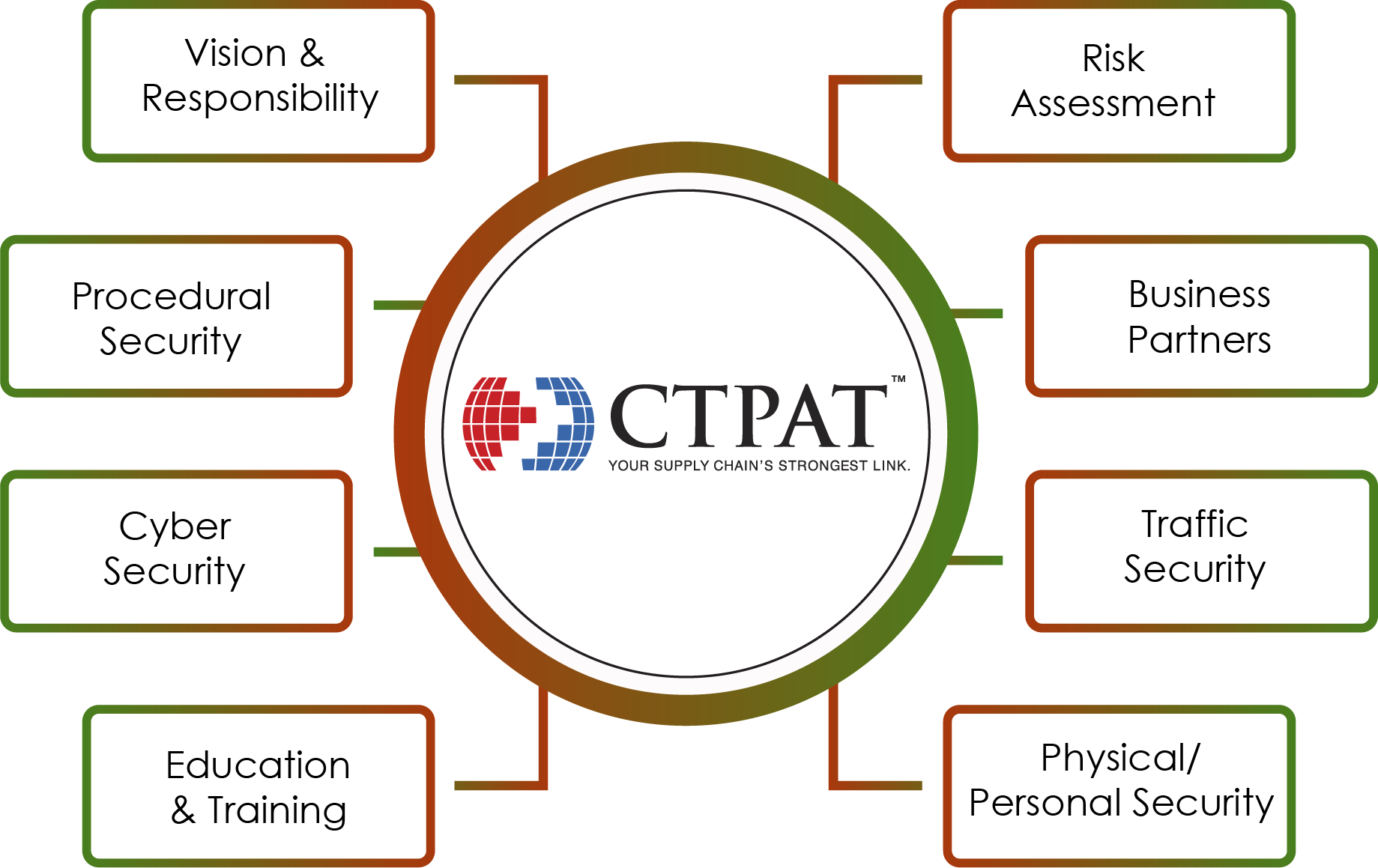
The following are key components of the audit:
1. Physical Security
A barrier, sufficient lighting, and monitored access are required for the perimeter of your facility. US-bound cargo areas are subject to a higher level of scrutiny for doors, windows, and locking mechanisms, as well as the perimeter.
2. Container and Conveyance Security
Most Turkish factories are at a disadvantage in this area of the audit. All container seals shipped to the United States must comply with the mandatory ISO 17712 High Security Standards. The seal's integrity must be confirmed and its number recorded and verified at every step of the supply chain.
3. Personnel Security
There are more stringent requirements for employee and visitor identification systems for those people that enter restricted cargo areas. Also, personnel background checks are required.
4. Access Controls
There must be documented procedures to control access to cargo processing areas, as well as a documented and enforced process for addressing and removing individuals that are in cargo processing areas without authorisation.
5. Cybersecurity
Systems that are used to process US-bound cargo must have documented and enforced procedures to manage and protect data as well as documented procedures for response and recovery of data breaches. This is a key concern for many facilities in Turkey and around the world.
6. Business Partner Checks
It’s really important to have procedures in place that thoroughly check that business partners (for example, freight forwarders or logistics business partners) who have US-bound shipments are C-TPAT compliant. These procedures need to be documented.
7. Security Procedures
There are various checks done on processes and how secure the documents of cargo and manifests are.
Having these procedures is more than an audit checklist. Having these procedures is more about having a security culture in your business that offers your US customers trust in your supply chain.
Key Objectives of C-TPAT Compliance
The primary goal of C-TPAT is to strengthen supply chain security and minimise risks throughout international trade operations.
C-TPAT compliance focuses on:
- Preventing cargo tampering
- Reducing smuggling risks
- Improving facility security
- Enhancing transportation security
- Strengthening employee screening systems
- Securing information and cybersecurity systems
- Improving supply chain transparency
These measures help create safer and more reliable global trade networks.
Benefits of C-TPAT Compliance for Turkish Companies
The case for completing a C-TPAT audit in Turkey goes well beyond simply satisfying a buyer's checklist. Here is what companies across Istanbul, Bursa, Izmir, and Gaziantep are gaining from the process:
| Benefit | Business Impact |
| Faster Customs Clearance | Reduces inspection delays at US ports of entry |
| Stronger Buyer Relationships | Demonstrates reliability to US importers |
| Reduced Cargo Risk | Prevents theft, tampering, and smuggling exposure |
| Competitive Advantage | Distinguishes compliant suppliers in the US market |
| Operational Improvements | Identifies and fixes internal security weaknesses |
| Better Risk Management | Reduces liability across the supply chain |
| AEO Programme Alignment | Supports Turkey's domestic customs compliance framework |
For a garment factory in Bursa producing for a major US retailer, or a logistics provider in Istanbul managing US-bound consolidations, these benefits translate directly into business continuity and revenue.
The C-TPAT Audit Process in Turkey: Step by Step
Here is what actually happens from the moment your US buyer requests compliance:
Step 1: Security Questionnaire
Your US buyer will send you a C-TPAT Foreign Manufacturer Security Questionnaire. This questionnaire will ask you many different questions about the security of your facility, your staff, the way you handle containers, and your IT systems. The answers you provide shape the scope of the audit, so you save time if you are honest.
Step 2: Gap Analysis and Pre-Audit Assessment
A good compliance consultant, such as GSCS International, will visit your facility and conduct a pre-audit assessment before the formal audit. This is extremely important because it identifies gaps in compliance, and you have the chance to address those gaps before the formal audit. This step is one of the most commonly skipped and most costly steps done by Turkish factories.
Step 3: On-Site Security Audit
Here, a security auditor will spend the entire day at your facility. The auditor will cover:
- Barriers and access points to the perimeter of the facility
- CCTV and lighting
- Container inspection and seal logs
- Security of storage and loading docks
- Employee ID systems and background checks
- IT systems and password policies
- Business partner systems
- All of these will be fully documented and photographed.
Step 4: Audit Report and Corrective Action Plan (CAP)
You will receive a report after the audit. This report will have a lot of detail and will outline the findings. Non-conformances will be categorised by severity, and a Corrective Action Plan will be provided detailing steps to be taken.
Step 5: Corrective Actions and Verification
You make the necessary changes and improvements within the time you agreed. Some US buyers require a desk review or a follow-up site visit, verifying the improvements, before they classify your facility as compliant in their supplier database.
Continuous Compliance
C-TPAT compliance is not an isolated activity. Most buyers require an annual or semi-annual re-audit to ensure they remain compliant in their supply chain.
Estimated C-TPAT Audit Cost in Turkey
Audit costs vary depending on the size and complexity of your operation. Below is a general guide for Turkish facilities:
| Company Size | Estimated Cost | Typical Scope |
| Small Business | $1,500 – $3,500 | Single facility, straightforward operations |
| Medium Company | $3,500 – $7,000 | Multiple departments, moderate complexity |
| Large Enterprise | $7,000 – $14,000+ | Multi-site, complex logistics operations |
Factors that influence the cost include:
- Number of facilities and warehouses
- Current state of your security systems
- Complexity of your supply chain
- Level of pre-audit preparation required
- Volume of corrective actions needed
It is worth noting that the cost of failing to comply — through lost buyer contracts, cargo delays, or repeated non-conformances — almost always exceeds the cost of a professional audit.
Why Turkish Exporters Choose GSCS Turkey
Choosing your compliance partner for a Turkey C-TPAT audit is just as important as the audit itself. The thoroughness of the audit and the clarity of the corrective action plan and the support you receive during the action plan determine how long the process will take to achieve compliant status.
GSCS International has worked in key manufacturing and logistics hubs in Turkey, such as Istanbul, Bursa, Izmir, Gaziantep, Ankara, and Mersin. Our auditors are well versed in the manufacturing environment in Turkey and the security requirements of U.S. customers and the CBP.
The reasons why companies work with GSCS include the following:
- Security auditors with in-depth knowledge and experience of the C-TPAT audit
- Time-saving pre-audit gap analyses that eliminate the need for repeat visits
- CTPAT compliance reports that go beyond compliance gaps and offer actionable insights
- Support of corrective actions during the remediation process
- A clearly defined process with timelines from the start
GSCS will ensure that Turkish garment factories, freight forwarders, logistics providers, warehouse operators, and exporters will be able to meet the security needs of their key U.S. customers.
Conclusion
Turkey has an essential role in international trade, and the demands of US buyers toward Turkish exporters continue to increase. For exporters, or businesses that operate in the US, C-TPAT compliance is no longer an option but rather an obligation.
Fortunately, working with the right partner will make the process less cumbersome. C-TPAT compliance requires an organisation to undergo a proper pre-audit evaluation, followed by development and implementation of advanced security measures.
GSCS International will help Turkish clients respond to security questions and the compliance process step-by-step until they pass the final verification.
To become one of the first C-TPAT compliant companies in Turkey, contact GSCS Turkish for assistance.
Frequently Asked Questions
A C-TPAT audit in Turkey is a third-party security assessment that evaluates a Turkish facility's compliance with the Minimum Security Criteria established by US Customs and Border Protection for foreign manufacturers and exporters involved in US trade.
Garment factories, logistics providers, freight forwarders, warehouse operators, and exporters in Turkey who supply US-based C-TPAT member importers typically need to demonstrate C-TPAT compliance.
No. Turkish factories cannot directly join the C-TPAT programme as certified members. Instead, they achieve C-TPAT compliant status through a third-party security audit, which satisfies the requirements of their US importer's C-TPAT membership obligations.
Costs generally range from $1,500 to $14,000 or more, depending on facility size, number of locations, and operational complexity.
From initial gap analysis to final verification, the full process typically takes four to eight weeks, depending on the volume of corrective actions required.
Yes. GSCS International provides C-TPAT compliance services across Turkey, including Istanbul, Bursa, Izmir, Gaziantep, Ankara, and Mersin.