SMETA Audit in Turkey: Benefits, Process & Compliance Guide
Introduction
Global supply chains are changing rapidly. International buyers have shifted their focus from solely price and production capacity to prioritizing ethical sourcing, worker welfare, environmental responsibility, and supply chain transparency.
For manufacturers and exporters in Turkey, meeting these expectations has become essential for maintaining competitiveness in international markets. This is where the SMETA audit plays a critical role.
Today, many global retailers, fashion brands, and sourcing companies require suppliers to complete SMETA audits before entering or continuing business relationships. Whether you operate in garments, textiles, footwear, packaging, or manufacturing, SMETA compliance can significantly improve your credibility and export opportunities.
As one of the world’s leading textile and apparel manufacturing hubs, Turkey is increasingly becoming a key sourcing destination for European and global brands. However, with growing demand comes stronger compliance expectations.
This comprehensive guide explains everything you need to know about SMETA Audit in Turkey, including its importance, benefits, audit process, requirements, challenges, and why GSCS Turkey is a trusted partner for SMETA audit services.
What Is a SMETA Audit?
SMETA, or Sedex Members Ethical Trade Audit, is an audit of social compliance developed and maintained by the nonprofit organization Sedex. Businesses around the world widely use the SMETA audit, making it the most popular social compliance audit.
The most important thing to remember about SMETA is that it doesn’t audit your product. The SMETA audit is more concerned with your people and your processes.
A SMETA audit examines the treatment of workers by the business, the safety of the worker environment, the business’s care for its workers, and how the operations of the business impact the environment. The SMETA audit provides international buyers with the review and confirmation that your factory performs in accordance with the ethical standards that the buyer is required to adhere to.
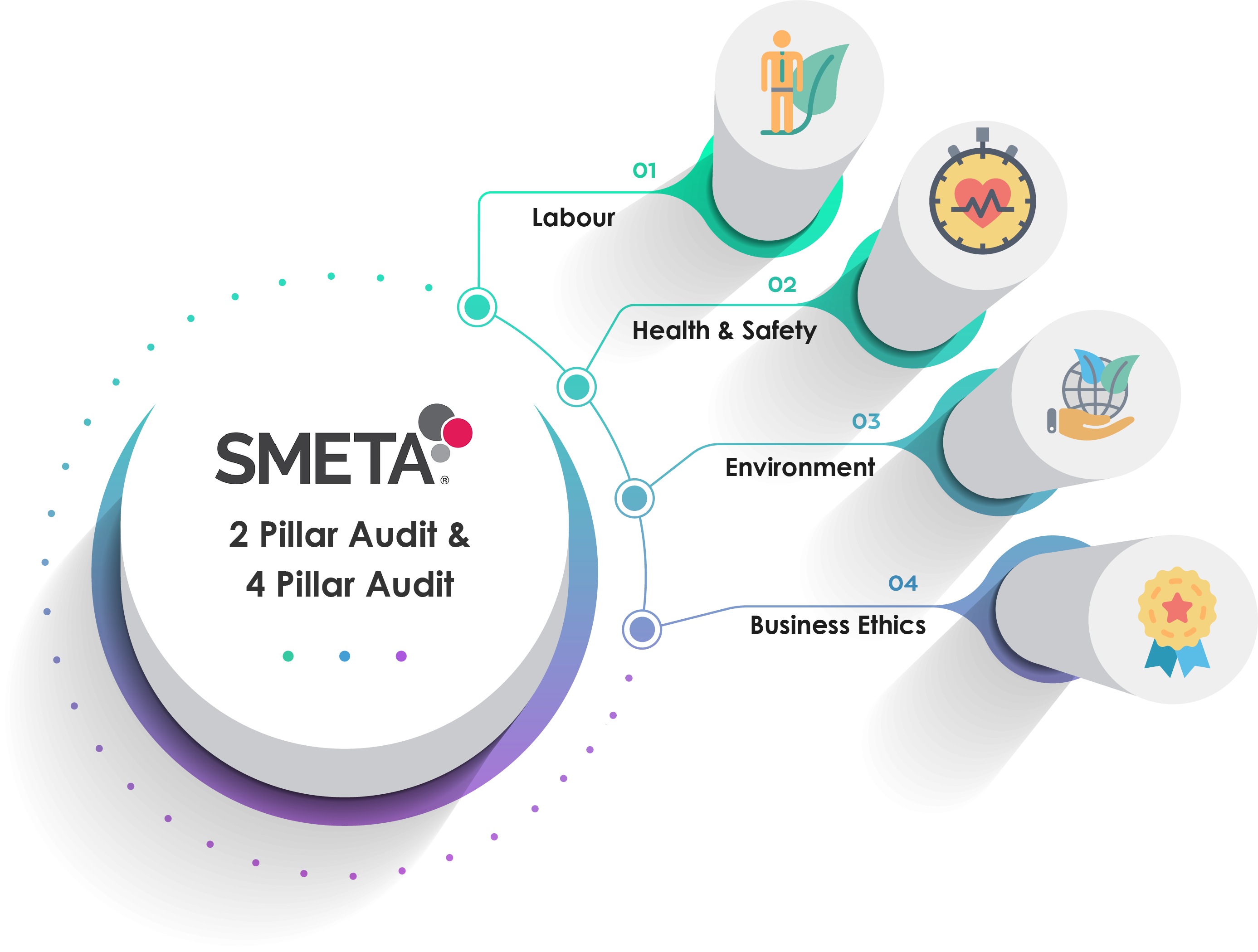
The SMETA audit covers four main areas:
Labor Standards — wages, working hours, child labor prevention, forced labor prevention, freedom of association, non-discrimination
Health & Safety—workers' welfare and safety, machinery safety, along with safety equipment and facilities, safety management, emergency procedures, and fire safety
The Environment—compliance with regulation, pollution control, waste management, and energy use
Ethics of Business—integrity of management, transparency, data protection, and policies of anti-bribery
2-Pillar vs. 4-Pillar SMETA: Which Is Right for Your Turkish Factory?
When factories first come to us, one of the first questions they tend to ask is whether they need 2-Pillar or 4-Pillar SMETA; it entirely depends on the requirements of their buyer.
2-Pillar SMETA is focused on labor standards and health & safety. A buyer may accept this version of SMETA if they are a smaller brand or have a less demanding sustainability policy.
4-Pillar SMETA accommodates all four pillars, incorporating environment and business ethics. The majority of large European and UK retailers require this version. Chances are, if you're doing business with H&M, Primark, ASOS, Next, Marks & Spencer, or any of the German or Dutch retailers, they almost always require the 4-pillar version.
For Turkish factories, 4-Pillar SMETA is the benchmark requirement when it comes to doing business with the EU and UK, which is the majority of Turkey’s international apparel exports.
Why SMETA Audit Became Important for Turkey’s Textile Industry
Turkey has a powerful position in global sourcing trade, but the SMETA audit brings additional requirements. This is how and why SMETA compliance became a requirement for the Turkish garment factories:
The EU Corporate Sustainability Due Diligence Directive (CSDDD) is a new regulation that recently went into effect.
The EU Corporate Sustainability Due Diligence Directive recently went into effect. Laws surrounding this new directive require that large European businesses identify, prevent, and mitigate human rights and environmental risks throughout their supply chains, even in their Turkish suppliers. As a result, European brands that choose to source from Turkey must ensure that their suppliers’ businesses are operating ethically and lawfully. The easiest way for a Turkish factory to provide assistance in meeting this requirement is to present a valid SMETA audit report.
Turkey's membership in the EU Customs Union provides a significant advantage, along with a compliance expectation that must be met.
Turkey has been a member of the EU Customs Union since 1996. Consequently, the Turkish garment exports to European markets enter with zero import duties, creating a structural pricing advantage for Turkish factories over Bangladeshi or Cambodian factories. However, with that pricing advantage, there is also a compliance expectation, which is that the European brands that choose to source from Turkey expect the same compliance standards that they would impose on any supplier from EU-adjacent countries. EU-based retailers have audited Turkish manufacturers for decades, leading to the establishment of a robust compliance infrastructure. SMETA is the benchmark for 2025.
SMETA 7.0 Has Been Launched
Sedex will be launching SMETA 7.0 in 2024, marking the first significant changes in several years. The most notable difference between SMETA versions is the Management Systems Assessment (MSA), meaning auditors determine not only if policies exist but also consider the extent to which senior managers and directors are able to ensure policies are intended for the long term. Given the Turkish factories that were able to pass older audits, they will need to ensure that SMETA 7.0 will take a higher standard in terms of management documentation and systems.
Key customers are getting pickier.
Over the years, H&M, Walmart, Primark, ASOS, Marks & Spencer, and many other brands sourcing in Turkey formally defined their SMETA requirements. Without a current and valid SMETA report, many won’t even start SMETA sourcing and, often, will stop sourcing until you complete the audit. This requirement creates panic. Preparation gives the factory a competitive advantage.
Why Global Buyers Require SMETA Audit
International buyers want to minimize risks in their supply chains.
SMETA audits help brands ensure that suppliers:
- Follow ethical labor practices
- Maintain safe workplaces
- Operate responsibly
- Reduce reputational risks
Many global companies now include SMETA compliance as a mandatory supplier requirement.
For factories in Turkey, this means SMETA is no longer optional—it is becoming a business necessity.
Industries That Need SMETA Audit in Turkey
SMETA audits are commonly required across multiple industries in Turkey.
These include:
- Garment manufacturing
- Textile production
- Footwear factories
- Fashion accessories
- Packaging manufacturers
- Home textile companies
- Electronics manufacturing
- Food processing facilities
Among these sectors, the Turkish garment and textile industry has one of the highest demands for SMETA compliance.
The Business Benefits of SMETA Certification for Turkish Factories
Beyond meeting buyer requirements, there are genuine business reasons why SMETA compliance strengthens a Turkish factory's position:
| Benefit Category | SMETA Benefit | Description |
| Global Market Access | International Buyer Acceptance | Helps Turkish manufacturers work with global retailers and sourcing companies. |
| Ethical Compliance | Responsible Manufacturing | Demonstrates commitment to ethical labor and workplace standards. |
| Brand Reputation | Strong Business Credibility | Improves trust among buyers, partners, and stakeholders. |
| Supply Chain Transparency | Better Buyer Confidence | Provides visibility into factory operations and compliance systems. |
| Workplace Safety | Improved Employee Conditions | Encourages safer and healthier working environments. |
| Competitive Advantage | Preferred Supplier Status | Certified factories gain an advantage over non-compliant competitors. |
| Risk Reduction | Lower Compliance Risks | Reduces legal, reputational, and operational risks. |
| Export Growth | Increased International Opportunities | Supports long-term business expansion in global markets. |
SMETA Audit Process: Step by Step for Turkish Factories
Knowing the entire process saves time and helps improve the audit outcome. Here's what you need to know about the SMETA process when you partner with GSCS Turkey.
Step 1: Register on Sedex
The first part of the process is your factory creating a Sedex supplier account. If your buyer has previously requested a SMETA audit, they may have sent you a direct platform invitation. If you are the one starting the process, GSCS Turkey will guide you through the Sedex registration, account creation, and connection to your buyer(s).
Step 2: Self-Assessment Questionnaire (SAQ)
Once registration is complete, your factory is to complete the Self-Assessment Questionnaire on the Sedex platform. The SAQ contains questions relating to your company's labor activities and health and safety, as well as your company's environmental and ethical business practices. Effective in 2024, Sedex has included the Environmental Self-Assessment Questionnaire (ESAQ), which will provide further details on environmental aspects.
Do not take the SAQ process lightly. Auditors will review your responses to the SAQ prior to their arrival, and the gaps between what you have stated and what you practice are a common source for audit findings. Factories that take the time to complete the SAQ have a much more pleasant audit experience.
Step 3: Document Preparation
This phase is where most factories either win the process or lose the process. The most crucial aspect of ensuring a smooth SMETA audit is document preparation.
Before the audit, your factory needs to prepare and organize the following documents:
- Employment contracts for all employees, including those employed seasonally or through a subcontractor
- Payroll documents that show legal compliance with Turkey’s minimum wage of 26,005.50 TRY per month in 2025
- Records of working hours for the past twelve months
- Fire records, emergency drills, incidents, and personal protective equipment (PPE) documentation
- Health and safety documentation that also includes records for workplace owners and safety specialists, which, as of January 2025, has become a requirement for all Turkish employers per the Occupational Health and Safety Law (İSG Kanunu No. 6331)
- Environmental permits alongside records for waste disposal
- Anti-bribery and business ethics policies
- Worker training records and supervisor training records
GSCS Turkey has developed an accurate list of documents to assist you with the preparation, as per Turkish law, including compliance with the Turkish Labor Law, minimum wage regulations set by the Ministry of Labor and Social Security, and applicable occupational health and safety regulations.
Step 4: Pre-Audit Gap Assessment (Highly Recommended)
GSCS Turkey highly recommends that a pre-audit gap assessment occurs prior to the formal audit. During this preparatory visit, the auditors are able to outline a list of non-conformances, document shortcomings, and gaps in policies ahead of time.
Only those factories that have put an investment into the pre-audit assessment have achieved a more favorable outcome of the formal SMETA audit and, in a fair number of instances, have totally avoided the expenditure of a re-audit.
Step 5: On-Site SMETA Audit
GSCS Turkey's APSCA-registered auditors, trained in SMETA 7.0, conduct the on-site audit. The audit lasts between one and two days, depending on the size of the factory and whether it is a 2-pillar or 4-pillar audit.
While on-site, our auditors will:
- Do a complete walkthrough of the facility, including production floors, worker welfare areas, the canteen, prayer and medical rooms, and the locations of fire exits and emergency equipment.
- Review all documents submitted during the prep stage.
- Do interviews with management and HR.
- Do confidential interviews with workers, both in small groups and in one-on-one sessions, and in the absence of any management, to confirm whether the practices documented are what actually happens on the production floor.
Worker interviews are one of the key aspects of a SMETA audit. These interviews are used to confirm whether the policies described in the factory documents are actually in practice. Under SMETA 7.0, the Management Systems Assessment performed during this process also looks at whether the factory management systems are in place to maintain compliance after the audit.
Step 6: Audit Report Upload to Sedex
After completing the on-site audit, GSCS Turkey will compile the complete SMETA audit and share it internally. This audit is to be uploaded to the Sedex platform within 3 to 5 working days. All buyers connected to your factory on Sedex will see this audit. One of the most commercially useful and pragmatic aspects of SMETA is that the audit is accessible to all buyers who are connected to your factory on Sedex.
Sedex results reports older than 24 months are considered obsolete. When planning your audit cycle, focus on the 24-month timeframe to ensure your report is valid for buyers.
Step 7: Corrective Action Plan (CAP)
Each factory, even the most well-run, is subject to audit findings. And it is expected. Negative findings assist buyers in ensuring that issues are resolved, aid factories in identifying areas for improvement, and help buyers pinpoint any gaps.
For each finding, GSCS Turkey works with your compliance team to create a detailed Corrective Action Plan (CAP) that describes the finding and determines the cause of the finding, the action to remedy the finding, and a timeframe for the action to remedy the cause of the finding. Once the timeframe has expired, we conduct a follow-up visit to verify the implementation and proper documentation of the remedy action.
How to Prepare for SMETA Audit in Turkey
Proper preparation is essential for successful SMETA compliance.
Businesses should start by conducting an internal compliance assessment to identify operational gaps.
Key preparation steps include:
- Reviewing labor policies
- Improving workplace safety systems
- Organizing employee records
- Ensuring wage and working hour compliance
- Conducting staff training
- Strengthening environmental practices
Working with experienced audit partners like GSCS Turkey can also simplify the preparation process and reduce compliance risks.
SMETA Audit Cost in Turkey
The cost of an SMETA audit in Turkey depends on your factory's size, number of workers, number of production lines, audit scope (2-pillar or 4-pillar), and current compliance maturity. The following estimates provide a realistic planning reference:
| Factory Size | Estimated Cost Range | Typical Audit Duration |
| Small (up to 150 workers) | $1,800 – $3,500 | 1 day |
| Medium (150–500 workers) | $3,500 – $7,000 | 1–2 days |
| Large (500+ workers) | $7,000 – $13,000+ | 2 days |
Note: Factories with strong existing documentation and compliance systems typically fall at the lower end of these ranges. Factories with significant gaps in payroll records, safety documentation, or HR systems may require additional preparation support before the formal audit, which affects the total cost. Contact GSCS Turkey for a personalized quote based on your specific factory profile.
Why SMETA Audit is a Smart Business Investment
Initially, SMETA audits may appear to be a mere compliance requirement. However, many companies with a higher understanding of business functions look at SMETA audits as a strategic business investment.
- The advantages of SMETA audits are as follows:
- Create long-lasting trust with buyers
- Streamline operations
- Lower compliance-driven risks
- Enhance business reputation
- Heighten potential for exporting
- Promote better employee morale
Companies with efficient compliance systems ultimately have better, and more stable, relationships with customers and buyers around the world.
Why Choose GSCS Turkey for SMETA Audit?
Selecting the right audit partner is crucial for achieving successful compliance.
GSCS Turkey provides professional and internationally recognized SMETA audit services for manufacturers and exporters across Turkey.
Experienced Audit Professionals: GSCS has expertise in textile, garment, and manufacturing compliance audits.
Internationally Recognized Services: GSCS supports businesses aiming to meet global buyer and retailer requirements.
Efficient Audit Process: Structured audit planning helps businesses complete SMETA audits smoothly and efficiently.
Compliance Improvement Support: GSCS helps factories identify gaps and improve workplace compliance systems.
Industry-Focused Expertise: GSCS Turkey understands the challenges faced by Turkish exporters and manufacturers.
Trusted by Global Supply Chains: GSCS supports businesses working with international sourcing and retail companies.
For companies in Turkey, GSCS is a trusted partner for improving compliance, transparency, and global competitiveness.
Frequently Asked Questions
A SMETA audit is an independent, third-party ethical trade audit that assesses your factory's labour practices, health and safety systems, environmental performance, and business ethics. European and US buyers require it because it gives them verified, documented confidence that their Turkish suppliers meet the ethical standards their own customers, investors, and regulators demand.
The on-site audit typically takes one to two days depending on factory size and audit scope. The complete SMETA report is generally ready and uploaded to Sedex within three to five working days after the site visit.
This depends on your specific buyers' requirements. If you supply to major European or UK retailers, 4-Pillar is almost certainly required. GSCS Turkey reviews your buyer's code of conduct before the audit begins to confirm the correct scope.
Under SMETA 7.0, audit reports older than 24 months are no longer considered robust by Sedex. Most Turkish factories schedule a fresh SMETA audit every one to two years to keep their compliance status current for all linked buyers.
Yes — this is one of SMETA's most commercially valuable features. Your audit report is uploaded to the Sedex platform, where all linked buyers can access it simultaneously. One audit covers the compliance requirements of multiple brands at once.