
C-TPAT Audit in Indonesia | Cost, Process & Compliance Guide for Exporters
Introduction
Indonesia is one of Southeast Asia's largest export powerhouses. Every year, thousands of garment factories, textile manufacturers, logistics companies, and freight forwarders across Java, Sumatra, and Kalimantan ship billions of dollars worth of goods to the United States. But as global trade becomes increasingly security-driven, simply producing quality products is no longer enough.
If your business exports to the US or works with American importers, you have likely encountered one of the most critical compliance frameworks in international trade today: the C-TPAT audit.
This guide covers everything Indonesian exporters and factory owners need to know about the C-TPAT audit process, minimum security requirements, estimated costs, and how to achieve compliance successfully.
What Is C-TPAT and Why Does It Matter for Indonesian Businesses?
C-TPAT stands for Customs-Trade Partnership Against Terrorism. This program originated with the US Customs and Border Protection. Following the September 11, 2001 incidents and with the program officially launching in April 2002, the focus quickly pivoted to global trade and the containment of terrorist threats through the perimeter of international goods.
C-TPAT means a lot to Indonesian exporters because the US is the largest trading partner of Indonesia, responsible for almost 36% of the international trade of textiles and garments; thus, any disruption of this trading partnership, which includes any lack of compliance with the US Customs' trade security mandates, would be detrimental to business.
Under the C-TPAT program, it is the responsibility of US importers and the trade partnership to ensure all their foreign suppliers, in this case, those based in Indonesia, meet the prescribed minimum security mandates. Thus, even though the Indonesian factories cannot directly apply for C-TPAT membership, they must comply with the C-TPAT requirements to be able to continue their business with the US buyers.
The program is designed to strengthen international supply chain security and reduce risks related to:
- Cargo tampering
- Smuggling
- Unauthorized access
- Terrorism-related threats
- Supply chain disruptions
Unlike product certification programs, C-TPAT focuses on operational security systems across the export supply chain.
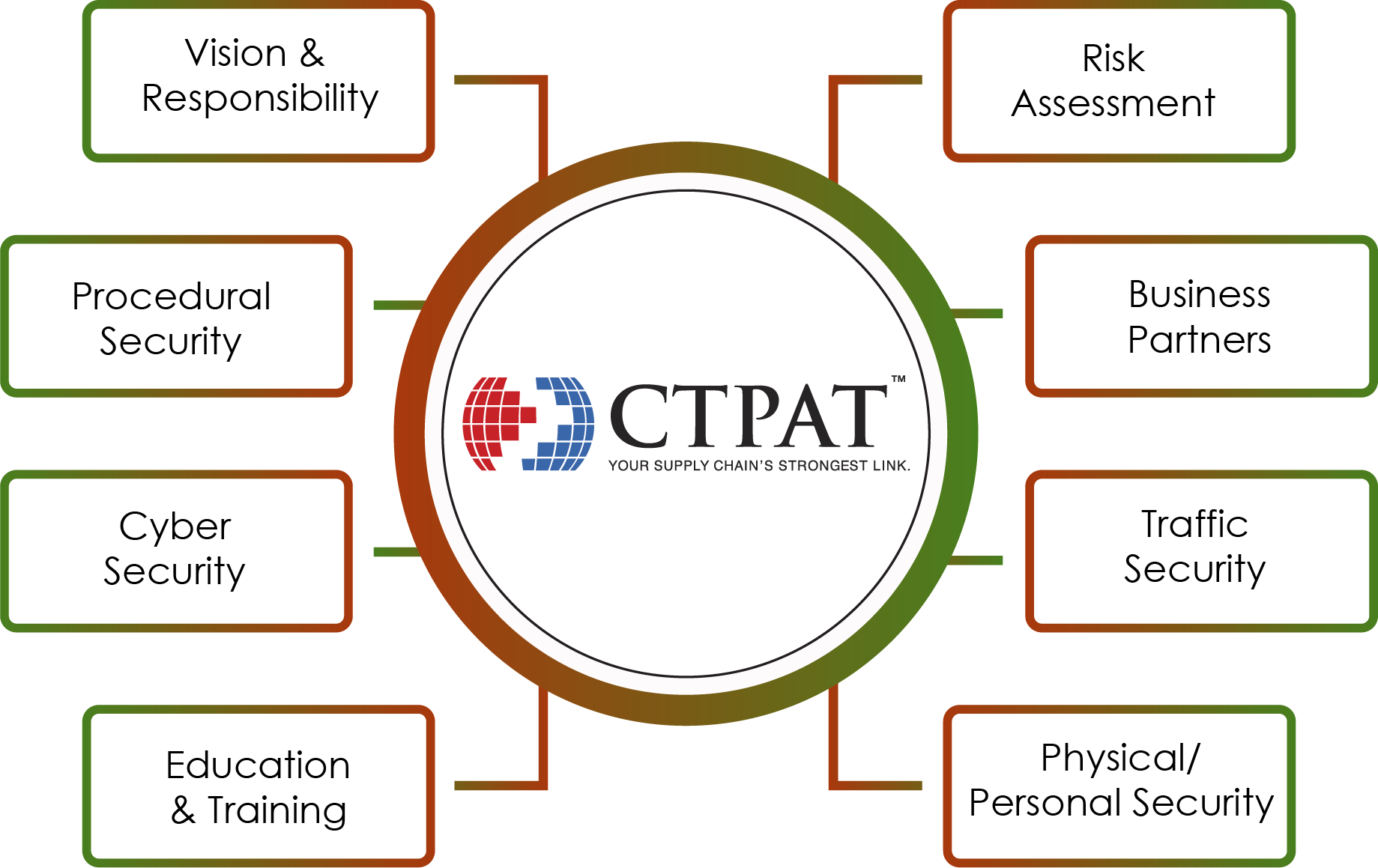
The audit evaluates how businesses manage:
- Physical security
- Cargo security
- Access control
- Transportation security
- Personnel security
- Procedural security
- IT security
- Security awareness programs
For exporters in Indonesia, C-TPAT demonstrates that supply chain operations meet internationally recognized security standards.
The Importance of C-TPAT for Indonesian Exporters
Indonesia has become one of the export manufacturing hubs in Southeast Asia. Every day, thousands of shipments containing garments, textiles, shoes, electronics, furniture, and industrial products leave the many ports in Indonesia to serve customers around the world.
As the volume of exports increases, buyers around the world are becoming more concerned:
- Cargo theft
- Tampering with shipments
- Gaps in the supply chain
- Risks with customs
- Safety in transportation
C-TPAT considers a supply chain security system to be of enormous importance. This is because the disruption of a supply chain causes the following:
- Customs problems
- Financial losses
- Delays in shipments
- Risks to the reputation of the buyer
For this reason, C-TPAT security requirements become a priority for suppliers for many buyers around the world.
Industries That Commonly Need C-TPAT Audits in Indonesia
C-TPAT is relevant for businesses involved in international trade and export logistics.
Industries commonly implementing C-TPAT security practices include:
- Garment factories
- Textile manufacturers
- Apparel exporters
- Logistics companies
- Freight forwarders
- Warehousing facilities
- Footwear manufacturers
- Consumer goods exporters
- Electronics manufacturers
Export-focused industrial regions such as Jakarta, Bandung, Surabaya, Tangerang, Batam, and Semarang are seeing increasing demand for supply chain security audits and export compliance support.
Can Indonesian factories directly get C-TPAT certified?
This is one of the most misunderstood points about the C-TPAT program in Indonesia.
From Bandung to Jakarta, Surabaya to Semarang, and all the way to Medan, regardless of the region, Indonesian manufacturers are not eligible for direct C-TPAT membership. Under the Customs and Border Protection's (CBP) current guidelines, C-TPAT membership for foreign manufacturers is only available to a limited number of countries and trade routes.
But just because a country is not eligible for direct membership doesn't mean they're off the hook.
For U.S. importers that are members of C-TPAT, the importer is personally responsible to CBP for ensuring that all foreign suppliers in their supply chains meet C-TPAT’s security requirements. Typical requirements for Indonesian suppliers, as a result, are the following:
- C-TPAT Foreign Manufacturer Security Questionnaire
- A C-TPAT compliance audit, conducted by a C-TPAT-approved security auditing firm
- A Corrective Action Plan to rectify any remaining security issues, and
- Documentary evidence of security compliance
When this process is carried out, the compliance status of the factory is virtually just as valuable as the C-TPAT certification itself. However, the factory does not receive its certificate.
C-TPAT Minimum Security Requirements for Indonesian Factories
The CBP Minimum Security Criteria (MSC) outline requirements for C-TPAT compliance for foreign manufacturers. The primary concerns of these requirements for Indonesian garment factories, logistics companies, and export companies involve the following aspects:
1. Physical Security
The entire factory premises should have perimeter fencing and barriers. Access points should be under control, and entry should be prevented. There should be CCTV surveillance in the loading area, the storage area, and the entrance to the factory.
2. Container and Conveyance Security
All containers intended to be shipped to the US should undergo the 7-point container inspection prior to being loaded. Furthermore, containers should be closed with a high-security seal complying with ISO resolution 17712, and the seal certificate should be verified at all transfer points in the supply chain.
This requirement for container seals has resulted in many Indonesian factories being unprepared, and factories that fail to establish a system for managing container seals have high chances of failing the audit.
3. Personnel Security
Access to the cargo handling and the loading areas of the containers, as well as the restricted areas, should be controlled by a system of background security checks. The factories should establish an employee and visitor management system and maintain a record of the access given.
4. Access Control
Restricted cargo areas should be physically limited. The factory should be able to provide evidence that it knows who enters and exits areas important to operations and how it controls and documents that activity.
5. Cyber Security
Documented cybersecurity procedures must protect all computer systems that directly or indirectly process U.S. cargo data. Password policies, incident response, and controls to access trade information are to be reviewed.
6. Business Partner Vetting
The factory should adequately document procedures for vetting security compliance for all carriers, freight forwarders, and third-party logistics providers involved in the export of U.S. cargo. This requirement places C-TPAT compliance obligations both forward and backward throughout the supply chain.
7. Conveyance & Seal Verification
There should be written procedures to verify the integrity of all conveyances that arrive at the factory for the collection of cargo, U.S. cargo in particular.
Benefits of C-TPAT Audit for Indonesia Businesses
As global trade becomes increasingly security-focused, C-TPAT offers significant operational and commercial advantages.
| Benefit | Business Impact |
| Improved Buyer Confidence | Builds trust with U.S. importers and international buyers |
| Reduced Cargo Risks | Minimizes theft, tampering, and shipment disruptions |
| Stronger Export Reputation | Positions exporters as secure and reliable suppliers |
| Better Customs Credibility | Improves confidence during customs evaluations |
| Operational Risk Reduction | Strengthens internal security systems |
| Competitive Advantage | Differentiates businesses in global sourcing markets |
For many Indonesian exporters, strong supply chain security has become a key differentiator in highly competitive international markets.
The C-TPAT Audit Process in Indonesia: Step by Step
Understanding the actual sequence of events helps Indonesian exporters plan effectively and avoid surprises.
Step 1: Buyer Issues a Security Questionnaire
The US importer initiates the process by sending a C-TPAT foreign manufacturer security questionnaire to an Indonesian supplier. The questionnaire is detailed. It covers the factory's physical security, the different ways the factory protects its staff, how the factory treats its containers, and IT security. The C-TPAT Foreign Manufacturer Security Questionnaire helps the US importer define the scope and the focus of the audit.
Step 2: Pre-Audit Assessment and Gap Analysis
A qualified compliance partner is entrusted with the responsibility to conduct the factory walk. A pre-audit gap analysis is conducted to assess the factory's level of compliance and security risks. The analysis is conducted by leading the gap assessment walk to the different factory operations, reviewing existing documentation, and so on. This step is important because it gives the factory the chance to treat the gap before the audit is finalized, instead of discovering it.
The gap analysis has the highest impact in terms of factory operations. Factories that do not prepare for the audit by conducting a gap analysis walk and a pre-audit audit before the assessment are likely to receive a worse score and undergo a longer remedial audit.
Step 3: On-Site C-TPAT Security Audit
A certified security auditor conducts a full-day on-site inspection of the factory. The audit covers every relevant area of the facility, including:
- The perimeter and physical security infrastructure
- CCTV coverage systems and security footage systems
- Cargo container inspection procedures and records
- Cargo storage and processing areas
- Employee and visitor area access control systems
- Seal logs and records.
- IT security systems and records
The auditor will review physical evidence, interview relevant people, and review documentation for each area of security.
Step 4: Audit Report and Corrective Action Plan
After the audit is finished, the auditor creates a report and documents the findings. The report will document the findings and cite non-conformities. Each non-conformity will be assigned a severity rating, and a corrective action plan (CAP) will be created to assign the who, what, and when to each non-conformity.
Step 5: Implementation, Verification, and Ongoing Compliance
Corrective actions will be verified through a site review or desk audit. Once non-conformities are verified and corrected, factories will be approved as suppliers for the US importer and will be subject to annual or biannual audits.
Estimated C-TPAT Audit Cost in Indonesia
| Company Size | Estimated Cost (USD) | Notes |
| Small Exporter / Factory | $2,000 – $4,500 | Basic audit, single facility, straightforward operations |
| Medium-Sized Factory | $4,500 – $9,000 | More detailed assessment, moderate complexity |
| Large Export Manufacturer | $9,000 – $18,000+ | Multi-facility, complex supply chain, extensive documentation review |
Several factors influence the final cost of a C-TPAT audit in Indonesia:
Number of facilities included in the audit scope
Size of the workforce and cargo handling volume
Existing security infrastructure—factories with CCTV systems, access controls, and documented procedures in place will have lower preparation costs
Complexity of the export supply chain, particularly the number of logistics providers involved in US-bound shipments
Corrective actions required—factories with significant security gaps will incur additional costs for physical upgrades and system implementation
While the investment may seem significant, the commercial cost of losing a US buyer relationship due to non-compliance is typically far greater.
Why Choose GSCS Indonesia for C-TPAT Audit Support?
Partnering with the right compliance firm is key to a smooth and successful C-TPAT audit. GSCS Indonesia provides specialized C-TPAT audit support to exporters, garment factories, logistics companies, and manufacturers across Indonesia.
Here is what makes GSCS Indonesia the trusted choice for Indonesian businesses:
Profound Knowledge of CBP Requirements: GSCS Indonesia's compliance experts stay current with the latest U.S. Customs and Border Protection minimum security criteria, ensuring your factory is always prepared for what auditors are actually looking for.
Indonesia-Specific Experience: GSCS Indonesia's auditors have hands-on experience across the country's major manufacturing and export hubs, including Jakarta, Bandung, Surabaya, Semarang, and Medan, and understand how CBP requirements apply in real Indonesian factory environments.
End-to-End Audit Support: From initial gap analysis and documentation preparation through to corrective action implementation and final compliance verification, GSCS Indonesia guides your business through every step of the process.
GSCS Indonesia provides clear and practical guidance: When gaps are identified, GSCS Indonesia provides specific, actionable remediation advice, whether that means upgrading physical security, implementing container seal management, or developing cybersecurity documentation.
Nationwide Coverage: GSCS Indonesia supports businesses across Java, Sumatra, Kalimantan, and beyond—no matter where your facility is located, the right audit team can be mobilized.
With professional support from GSCS Indonesia, exporters and manufacturers across the country can approach the C-TPAT audit process with confidence and achieve full supply chain security compliance.
Frequently Asked Questions
A C-TPAT audit in Indonesia is a third-party security assessment that evaluates whether a factory or export business meets the supply chain security standards required by US Customs and Border Protection for goods entering the United States.
No. Indonesian factories cannot apply directly for C-TPAT membership, but they can achieve C-TPAT compliant status by satisfying the minimum security criteria set by CBP, which is required by US importer partners who hold C-TPAT membership.
From initial gap analysis to completed compliance verification, the process typically takes three to six months depending on the factory's current security maturity and the speed of corrective action implementation.
Estimated costs range from $2,000 to $18,000 or more depending on the size, complexity, and number of facilities involved.
Re-audits are typically required annually or every two years to maintain compliance status in your US buyer's approved supplier database.
Garment factories, textile manufacturers, footwear producers, electronics assemblers, freight forwarders, and logistics providers with US-bound operations are the most frequent subjects of C-TPAT audits in Indonesia.