SLCP Verification in Cambodia for Garment Factories & Exporters
Introduction
The global manufacturing industry is changing rapidly. International buyers now prioritise more than just product quality and pricing. Today, brands seek information about the manufacturing process, worker treatment, and adherence to responsible labour practices.
For factories in Cambodia, this shift has created a growing need for better social compliance systems.
At the same time, many suppliers face another major challenge—repetitive audits from multiple buyers. Different brands often require separate social compliance audits, creating pressure on factories, increasing operational expenses, and disrupting production schedules.
This is where the Social & Labor Convergence Program (SLCP) becomes highly valuable.
The Social & Labor Convergence Program (SLCP) is helping factories simplify social compliance assessments while improving labour transparency across global supply chains. For garment factories, textile manufacturers, and export businesses in Cambodia, SLCP is becoming an increasingly important part of international compliance expectations.
What is the Social & Labor Convergence Program (SLCP)?
The Social & Labor Convergence Program (SLCP) is designed to better work conditions throughout supply chains and also eliminate repetitive social audits.
We think of social audits as collecting data to confirm that different companies that buy from the same supplier are all ensuring the supplier’s working conditions are compliant with social
standards. We think of SLCP as collecting data to ask that the different companies that buy from the same supplier conduct social audits.
With SLCP, social audits can be consolidated to the level of the supplier.
The programme seeks to eliminate unnecessary social audits in global supply chains.
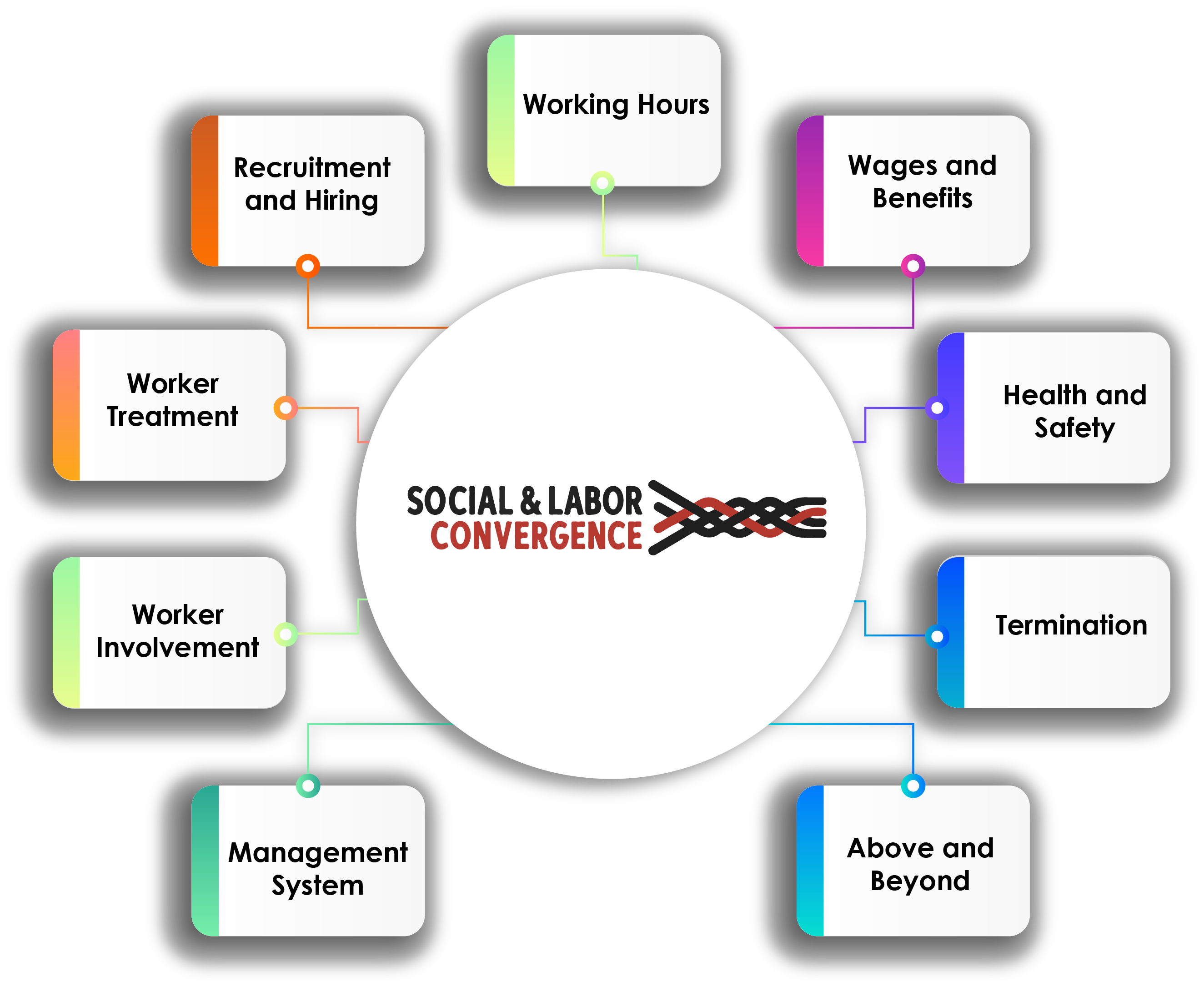
The programme is designed to focus on the following:
- Labor conditions
- Worker & workplace welfare
- Working hours
- Health & safety
- Wages & benefits
- Management systems
- Workplace ethics
For the factories in Cambodia, SLCP is more streamlined and sensible than traditional social compliance standards.
Why SLCP Matters Specifically for Cambodia
Cambodia is an SLCP active country. Factories in Phnom Penh, Sihanoukville, Kampong Speu, and Kandal
Province can create profiles on the SLCP Gateway to complete the SLCP Common Assessment Framework (CAF) for verification and approval. Any buyer platforms connected to the Gateway can view the verified results.
From SLCP’s perspective, here are the reasons that make Cambodia special.
Cambodia's garment/footwear industry has the highest ratio of international customers relative to its production capacity. It is possible that a mid-size factory in Phnom Penh is an exporter to
customers in a number of relatively far locations, e.g., Germany, the UK, Japan, and the US. In the past, this scenario meant that the factory had to comply with four different requirements and
undergo four separate audits for each of these buyers at different times of the year. This situation requires a special SLCP solution, and that is the only assessment-multiple-buyer-sharing model.
Since Cambodia is interlaced with the GIZ initiative for the Global Solidarity project and is a GIZ funding country, it means that the phased funds of the GIZ towards the SLCP converged phase of the
Cambodia apparel and footwear supply chain are migrating and that, therefore, Cambodia’s SLCP matured and extended. In this case, the SLCP evolution/expansion country for Cambodia means
that Cambodia was, in fact, a “supply chain early” rather than a “supply chain late", as it is sourcing from zero infrastructure.
This is why SLCP verification in Cambodia is becoming more important.
Many factories currently face the following:
- Repeated social audits
- Audit fatigue
- High compliance costs
- Production interruptions
- Different buyer requirements
SLCP helps solve these problems by creating a shared assessment system that multiple buyers can use.
For factories in Cambodia, adopting SLCP can help:
- Reduce duplicate audits
- Improve buyer confidence
- Increase operational efficiency
- Strengthen worker welfare systems
- Simplify compliance management
As international buyers move toward standardised compliance systems, SLCP is gaining a valuable competitive advantage.
How SLCP Works in Cambodia
With SLCP, you may find that international buyers display the correct spectrum rather than the typical "pass" or "fail" display system for certification. SLCP reduces social audits and improves labour transparency with a modern, data-driven assessment and verification framework that operates along the supply chain.
SLCP's primary aim is to devise a unified system extending beyond the factory walls. Buyers, in this sense, can access confirmed data with a single assessment.
For the majority of Cambodia's textile and garment factories, that unified system brings a promise of transformed compliance management that enhances efficiency and transparency.
The system begins with a factory that performs a self-assessment, employing the data collection tool (DCT). This structured assessment provides data on numerous aspects of the work environment:
- Working conditions
- Employee well-being
- Hours and pay
- Safety
- Management
- Labour policies and procedures
The system is also self-regulating. The DCT gathers detailed, sometimes sensitive data, and an approved independent body verifies the system to ensure reliability and trust in the data.
The intuitive SLCP system enables the global delivery of verified data without the need for third-party intervention. This makes the system efficient for factories (clients) and global clientele. The SLCP system's primary aim makes focus and improvement a central feature of the workplace, rather than a mere goal.
Benefits of SLCP for Factories in Cambodia
One of the biggest reasons factories adopt SLCP is the long-term operational and commercial benefits it provides.
Key Benefits of SLCP Verification
| Benefit | Business Impact |
| Reduced Audit Fatigue | Fewer repeated buyer audits |
| Lower Compliance Costs | Saves operational expenses |
| Better Buyer Relationships | Builds trust with global brands |
| Improved Efficiency | Reduces production disruption |
| Enhanced Transparency | Strengthens labor compliance visibility |
| Stronger Worker Welfare | Encourages improved workplace conditions |
For Cambodian garment factories, these benefits can significantly improve overall operational performance.
SLCP Verification Process in Cambodia
1.Register on the SLCP Gateway
Your factory can easily create an SLCP Gateway profile. The SLCP Gateway is a digital platform that houses and shares all verified assessment data. This process is simple and free of charge. A profile on the SLCP Gateway acts as a factory’s digital ID.
2. Complete the CAF Self-Assessment or Joint Assessment
Your factory should fill out the CAF self-assessment tool. This has nine sections. This can be done as a self-assessment (completed entirely by the factory team) or as a joint assessment (completed with the help of a partner). For first-time users, a joint assessment is more helpful, as a guided completion improves data quality. The tool can be accessed offline as a spreadsheet or on an accredited host platform.
3.Approved SLCP Verification Body Conducts On-Site Assessment
SLCP Verifier Bodies sends qualified and certified verifiers to your factory. These verifiers are to ensure that self-assessment data is a true reflection of factory conditions. They will do this job by reviewing documents, observing the factory, and interviewing employees. Most importantly, the verifiers do not evaluate the factory’s own performance or the data quality. The key question of the assessment is whether the data is accurate. This on-site assessment must take place within two months of the self-assessment completion.
4.Verify assessment report and responses
A verified assessment report will be displayed on your Gateway profile after an on-site visit. Assessment reports can be reviewed and accepted within 14 days. Assessment reports can also be disputed for any reported verification errors or discrepancies. Data ownership continues to be your facility’s.
5.Share Gateway Data with Buyers
You can decide to share your verified assessment report to whichever buyer platform you’d like, provided your buyer platform is integrated with SLCP Gateway or an accredited host system. You can share your verification with as many buyers as you like, and at the same time. It becomes immediately evident to the Cambodian factories dealing with multiple international buyers.
SLCP Verification Cost in Cambodia
The cost of SLCP verification in Cambodia can vary depending on several operational factors.
Estimated SLCP Verification Cost
| Facility Size | Estimated Cost |
| Small Factory | $1,500 – $3,000 |
| Medium Factory | $3,000 – $6,000 |
| Large Factory | $6,000 – $12,000+ |
Factors Affecting Cost
Several elements can influence the total verification cost:
- Number of employees
- Facility size
- Existing compliance readiness
- Complexity of operations
- Verification duration
- Documentation quality
Although there are upfront costs involved, SLCP often helps factories reduce long-term compliance expenses by minimizing repeated audits.
Why Choose GSCS for SLCP Verification in Cambodia
SLCP implementation success hinges on proper partner selection for verification.
With SLCP verification requests focused in Cambodia, GSCS International stands as a partner that offers an SLCP verification pathway to businesses.
GSCS’s offerings as a suitable partner include the following:
- Compliance professionals with extensive experience
- Intimate knowledge of SLCP frameworks
- Knowledge of DCT and support on how to practically fulfil DCT objectives
- No hidden agendas for verification
- Reliable compliance support
As a firm, GSCS helps improve labour transparency with a focus on social compliance and SLCP systems for businesses in Cambodia, covering the geographical areas of Phnom Penh, Siem Reap, and Sihanoukville.
Conclusion
As global buyers continue to prioritise ethical sourcing and labour transparency, programmes like SLCP are becoming increasingly important in international supply chains.
For garment factories, textile manufacturers, and export businesses in Cambodia, the Social & Labour Convergence Program (SLCP) offers a smarter and more efficient way to manage social compliance requirements.
By reducing repetitive audits, improving transparency, and strengthening worker welfare systems, SLCP helps factories operate more efficiently while building stronger relationships with global brands.
With professional support from GSCS International, companies in Cambodia can successfully complete SLCP verification and position themselves as trusted, transparent, and responsible suppliers in the global market.
Frequently Asked Questions
Yes. Cambodia is officially listed as an SLCP-active country. Factories across Phnom Penh, Kandal Province, Kampong Speu, Sihanoukville, and other manufacturing regions can register on the SLCP Gateway and complete a CAF assessment with an approved verifier body operating in Cambodia.
No. This is one of SLCP's most important distinctions. The CAF verification produces a detailed, factual dataset about your facility's social and labour conditions across nine modules. There is no score, no rating, and no corrective action plan issued by the verifier. Your buyers apply their own standards to the verified data and make their own assessments. This neutrality is intentional — it allows the same data to serve buyers with different priorities simultaneously.
Verified SLCP data is valid for 12 months. If significant changes occur at your facility within that period, new shift systems, major workforce changes, or restructured wage arrangements, it is recommended to undergo a fresh verification to ensure the data shared with buyers remains accurate and current.
The SLCP Gateway is the central digital platform where verified assessment data is stored and managed. It connects electronically to Accredited Host platforms — third-party digital systems used by brands and buyers to receive and analyse SLCP data. Once your verified report is on the Gateway, you can share it with any connected buyer in a few clicks, without commissioning a new assessment for each one.
SMETA is a traditional social audit that produces a scored report with findings and corrective action plans, uploaded to the Sedex platform. SLCP produces unscored, descriptive data that buyers interpret themselves, shared through the SLCP Gateway. SMETA is preferred by many Sedex-connected buyers; SLCP is accepted by over 100 brands globally who have committed to moving away from proprietary audit tools. The two programmes cover similar ground but serve different buyer ecosystems, and many Cambodian factories currently use both during the industry's transition period.