C-TPAT Audit in Cambodia for Exporters & Garment Factories
Introduction
Global trade is becoming more security-focused than ever. International buyers, customs authorities, and logistics partners now expect businesses to maintain strong supply chain security standards before products can move smoothly across borders.
For exporters and manufacturers in Cambodia, this shift is especially important.
If your business exports products to the United States or works with international supply chains, you have probably heard about C-TPAT certification. Today, many global buyers and logistics partners prefer working with suppliers that follow internationally recognised security standards.
This is where the C-TPAT audit in Cambodia becomes highly valuable.
Whether you operate a garment factory, logistics company, freight forwarding business, warehouse, or export company, understanding the C-TPAT audit process can help improve your global credibility and strengthen your supply chain security.
What is C-TPAT?
The C-TPAT (Customs-Trade Partnership Against Terrorism) programme was developed by U.S. Customs and Border Protection (CBP) to help businesses comply with the requirements of the U.S. Customs and Border Protection (CBP).
The C-TPAT programme aims to safeguard U.S. borders and streamline the lawful movement of American goods across international borders through collaborations with businesses. C-TPAT businesses are required to comply with international safety standards and regulations in order to retain said partnerships.
Consistent supply chain security is the most important requirement of C-TPAT. This means businesses must follow safety regulations in the following areas:
- the safe movement of goods
- the safety of places of business
- the safety of employees and the protection of their private information
- the safety and protection of the information of the business and its partners
- the verification of business partners
Take insecurity seriously. As the world becomes more complex, buyers take security matters much more seriously and automatically feel intimidated by businesses that fully comply with C-TPAT.
Why C-TPAT Audit is Important in Cambodia
Many importers are now based in the USA, and suppliers are presently choosing to do business with brand owners.
Secure supply chains are a source of competitive advantage for many companies because they can demonstrate superior supply chain practices.
Cambodian exporters describe C-TPAT achievements as follows:
- Better supply chain facilities.
- We have reduced risks in supply chain delivery.
- Greater global buyer confidence.
- Improvement of supply chain delivery time.
- Greater business reputation in the international community.
To many Cambodian exporters to the USA, C-TPAT is no longer just an optional supply chain practice; it is a key business requirement.
Can Factories in Cambodia Become C-TPAT Certified?
Most C-TPAT articles ignore this fact, so we want Cambodian manufacturing partners to know: Cambodian factories are not permitted to apply for C-TPAT membership or certification.
Manufacturers undergo C-TPAT membership processing for foreign manufacturers only if they are legally registered with the U.S. CBP within a specific membership tier. Cambodia, along with several other countries with factories, is outside the direct eligibility of specific membership tier processing.
Instead, factories in Cambodia will continue to work toward the C-TPAT-compliant status, which is not the same as C-TPAT certification, as they aim to meet the necessary security criteria and best practices outlined by the CBP to enhance their supply chain security. This framework is not a loophole or a mere formalism. This is the framework that the CBP has established for this situation.
A U.S. importer who is a C-TPAT (Customs-Trade Partnership Against Terrorism) member must ensure that all their foreign suppliers, including Cambodian factories, meet C-TPAT security requirements, even though these suppliers cannot be directly certified. The U.S. importer/company is responsible to the CBP, and the CBP requires that the U.S. importer/company and their suppliers demonstrate compliance by doing the following:
- Completing and submitting a C-TPAT Foreign Manufacturer Security Questionnaire
- Undergoing a third-party C-TPAT compliance audit by an approved security auditing firm
- Taking corrective measures to close any open security vulnerability
- Keeping records to show evidence of compliance
Cambodian factories may not hold a C-TPAT certificate, but if your U.S. buyer is C-TPAT certified, then you have to meet compliance as well, and a C-TPAT security audit would be compliance.
Minimum Security Standards Required by C-TPAT for certification in Cambodia
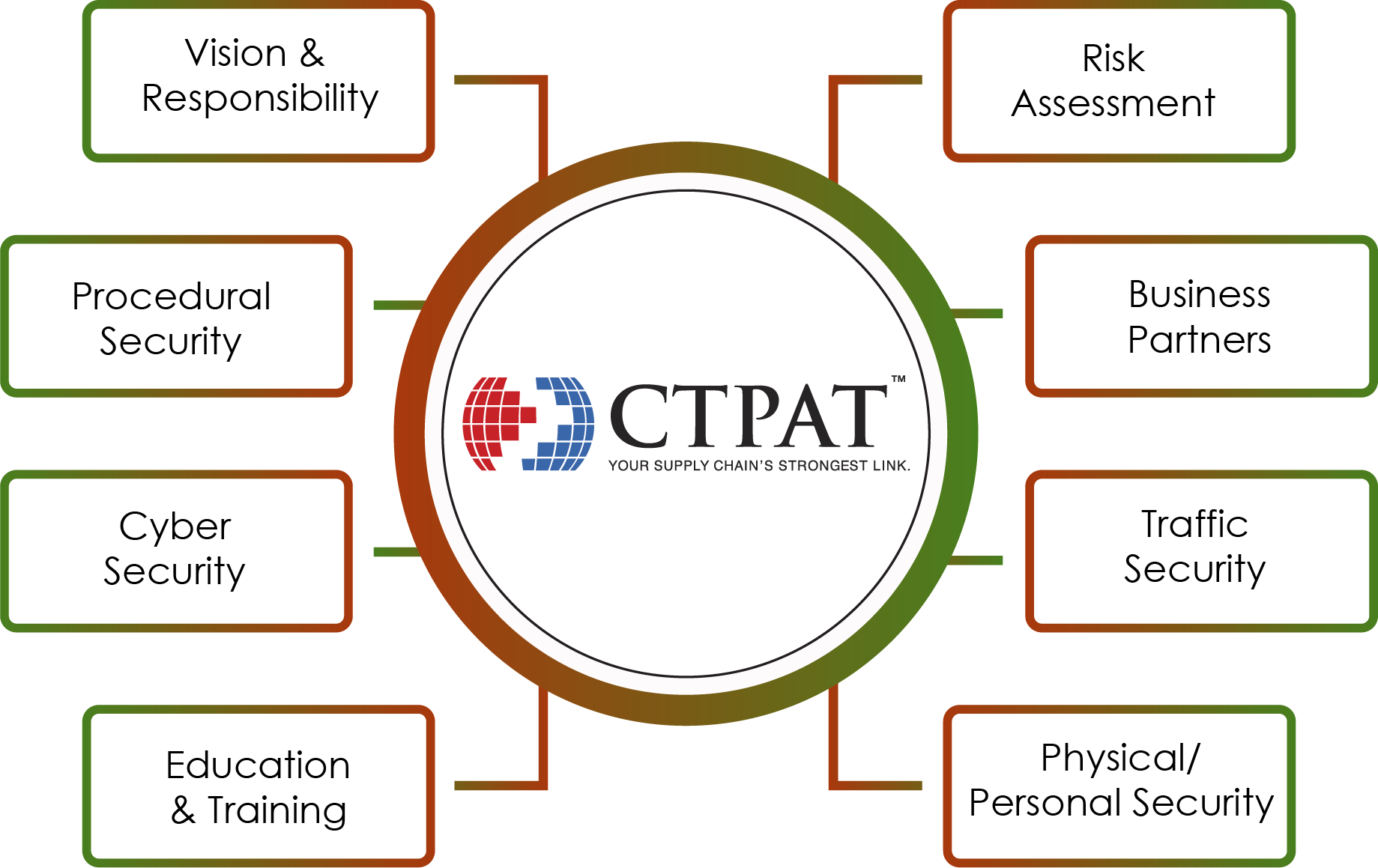
The US Customs and Border Protection (CBP) has established Minimum Standards (MS) for all foreign manufacturers engaged in trade with the U.S. These standards include reviews of the operations of your facility with respect to the treatment of goods, persons, and information in relation to freight being shipped to the U.S. The audit primarily covers the following areas:
Physical Security
Perimeter barriers, lighting, doors, and window locks, locks for U.S. freight, closed-circuit television (CCTV) systems, and equipment to control access to U.S. freight.
Container & Conveyance Security
Protocols for checking containers (7-point inspections), using high-security container seals that meet ISO standards, and keeping records of the condition of all seals for US-bound shipments.
Personnel Security
Background checks for all employees and visitors to the restricted areas of the facility, as well as the use of employee identification and visitor passes.
Access Controls
Controlled access to restricted cargo handling areas, procedures for control of access to and egress from the facility, and policies and procedures for restricting the access of unauthorised individuals.
Cybersecurity
Protection of all computer systems and data about US-bound cargo, control of passwords, and documented procedures regarding system security breaches.
Business Partner Vetting
Policies outline the process for verifying C-TPAT compliance for carriers, freight handlers, and integration partners involved in U.S.-bound trade.
One thing that catches several Cambodian factories off guard is the rules for container seals. All containers that are shipping to the US must have a high security seal that meets the most current ISO 17712 standard. While the seal's number is to be recorded, that number, along with the seal, must be checked with each handoff throughout the supply chain. While this process may sound simple, the procedure is more complicated than what most factories do for standard practice.
Benefits of C-TPAT Certification for Cambodian Companies
Obtaining C-TPAT certification in Cambodia offers both operational and commercial advantages.
Key Benefits of C-TPAT Audit
| Benefit | Business Impact |
| Faster Customs Clearance | Reduces border inspection delays |
| Lower Security Risks | Prevents theft and tampering |
| Strong Buyer Confidence | Builds trust with global clients |
| Improved Supply Chain Visibility | Enhances operational transparency |
| Competitive Advantage | Strengthens export opportunities |
| Better Risk Management | Identifies security vulnerabilities early |
For companies involved in international trade, these benefits can directly improve long-term business growth.
The C-TPAT Audit Process in Cambodia: What Actually Happens
1. Buyer Request / Questionnaire
The process begins when a U.S. importer issues a C-TPAT Foreign Manufacturer Security Questionnaire to your factory. The questionnaire will ask you about your physical security, your personnel, how you handle containers, and your IT systems. How you respond to the questionnaire will, to a large extent, determine the compliance assessment and the audit scope as a result of the assessed gaps.
2. Gap Analysis / Pre-Audit Assessment
The process will start before the first formal audit when your compliance partner walks through the factory and does a CBP compliance audit assessment. This walkthrough is critical, as there is a large gap that the factory has significantly more time to address than the time the actual auditors will spend at the factory. By skipping this step, you can guarantee that your compliance partner is wasting your time.
3. On-Site Security Audit
Once the pre-audit assessment is critical, you can move on to the factory itself. A security person is dispatched for the full day to assess perimeter security, security cameras, and access control. They are also going to assess the security of your cargo storage, container inspection, and loading docks. Various documents will be reviewed, including seal logs, background checks of staff, visitor logs, and IT security.
4. Audit Report & Corrective Action Plan
After the full day, you will receive a report that includes the actual findings and the Corrective Action Plan (CAP), which will specify the identified gaps, the necessary remediations, and their deadlines. The report will include all the findings documented by the audit, along with photographs.
5. Implementation & Re-verification
Once you’ve confirmed your corrections, you have to begin implementation within your stated time frame. Some buyers want to conduct further verification, whether it is via a desk review or a short revisit, to deem your facility as compliant in their supplier’s database. Compliance is sustained via annual or biannual re-audits.
Estimated C-TPAT Audit Cost in Cambodia
| Company Size | Estimated Cost | Details |
| Small Business | $2,000 – $4,000 | Suitable for smaller exporters or businesses with simple operations |
| Medium Company | $4,000 – $8,000 | Includes more detailed audit procedures and compliance evaluations |
| Large Enterprise | $8,000 – $15,000+ | Complex operations, multiple facilities, and extensive security assessments |
The cost of a C-TPAT audit in Cambodia can vary depending on several important factors, including the size of the company, the complexity of its operations, the number of facilities involved, and the current level of security compliance within the organization.
For businesses involved in international trade, especially companies exporting products to the United States, investing in C-TPAT compliance is becoming increasingly important. Although the certification process requires financial investment, it can provide long-term benefits such as improved supply chain security, reduced customs delays, stronger buyer confidence, and better international business opportunities.
In Cambodia, the overall cost of a C-TPAT audit generally depends on:
- Company size and workforce
- Number of warehouses or production facilities
- Existing security systems
- Supply chain complexity
- Audit preparation requirements
- Corrective actions and security improvements
Why Choose GSCS for C-TPAT Audits in Cambodia?
Partnering with the right compliance firm is key to successful certification.
GSCS International provides specialised assistance to businesses requiring C-TPAT audits in Cambodia.
The following factors contribute to GSCS's trustworthiness:
- Knowledgeable compliance experts
- Direct assistance with audit prep
- Extensive knowledge of supply chain security
- Support a process that is constant and clear
GSCS offers assistance to businesses across the entirety of Cambodia, such as in Phnom Penh, Siem Reap, and Sihanoukville, to aid companies in compliance with security and enhance their global trade activities.
Conclusion
As global trade becomes more security-focused, companies can no longer ignore supply chain protection and customs compliance. International buyers now expect suppliers to maintain secure, transparent, and well-managed operations.
For exporters, garment factories, logistics providers, and manufacturers in Cambodia, obtaining C-TPAT compliance (Customs-Trade Partnership Against Terrorism) can significantly improve credibility and international business opportunities.
By strengthening supply chain security, reducing shipment risks, and improving operational transparency, Cambodian businesses can position themselves as trusted partners in global trade.
With professional support from GSCS International, companies across Cambodia can successfully prepare for C-TPAT audits and meet international supply chain security expectations
Frequently Asked Questions
C-TPAT audit evaluates supply chain security practices to ensure companies meet international trade security standards.
Garment factories, exporters, logistics companies, warehouses, and businesses exporting to the United States often require C-TPAT compliance.
Benefits include faster customs clearance, reduced shipment delays, improved security, and stronger buyer confidence.
The cost usually ranges from $2,000 to $15,000 depending on company size and operational complexity.
It helps exporters improve supply chain security and meet international buyer requirements, especially for U.S. trade.