SMETA Audit in Vietnam: Complete Guide for Manufacturers, Exporters,
Introduction
Vietnam stands out as a key manufacturing and export hub in Asia. From textiles and garments to footwear, furniture, electronics, and consumer goods, thousands of Vietnamese factories supply products to some of the world's largest retailers and brands.
International buyers now expect not only quality and pricing but also transparency, ethical labor, worker welfare, and responsible operations throughout the supply chain.
As a result, SMETA Audit in Vietnam is now one of the most requested social compliance assessments for export-oriented factories.
Many global brands now require suppliers to complete an SMETA audit before approval. In Vietnam, passing the audit boosts buyer trust, enhances workplace standards, and opens export opportunities.
Knowing the SMETA audit process is essential for long-term success in factories, mills, footwear, packaging, or electronics manufacturing.
This guide covers key aspects of SMETA Audit Vietnam, including benefits, process, costs, requirements, challenges, and how GSCS Vietnam supports compliance.
What is an SMETA Audit?
SMETA Audits (Sedex Members Ethical Trade Audit) are one of the most common social compliance audits in the world. You can think of an SMETA audit less like an inspection of product quality and more like an inspection of the people, the safety of the workplace, the health and safety practices, and the ethics of the business.
Sedex, a non-profit organization, created and maintains the SMETA audit framework. Sedex is one of the largest ethical supply chain data platforms worldwide. SMETA and Sedex shape the supply chain landscape with over 74,000 members.
SMETA audits do not inspect product quality; they inspect people and processes.
SMETA audits determine how a factory develops its workforce, maintains safe work environments, ensures transparency in management, and more.
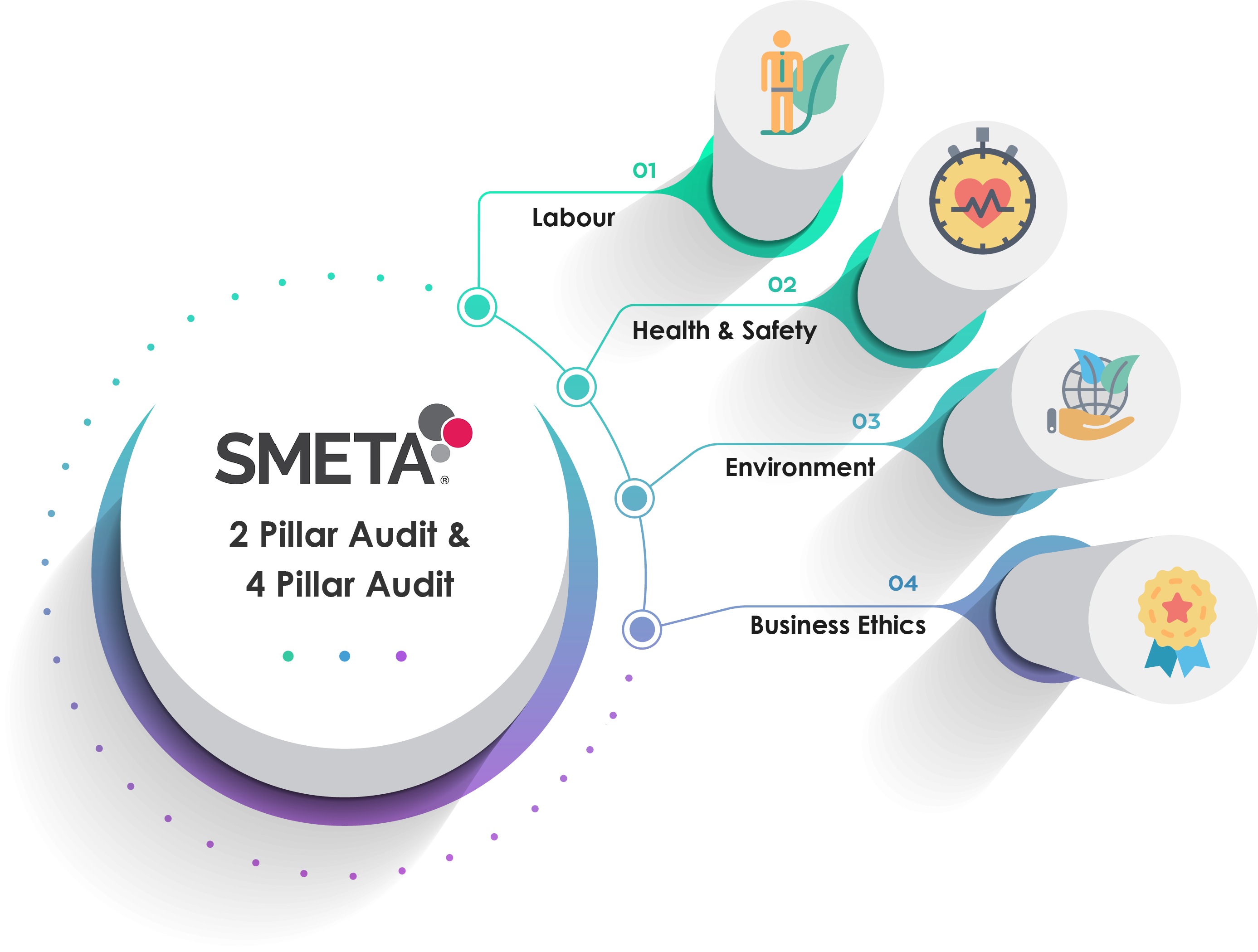
SMETA is made up of four main areas:
Labor Standards: this will cover the payment of wages, working hours, child labor, the prevention of forced labor, and the protection of the rights of associations and the non-discrimination of members. In Vietnam, this directly correlates to the Vietnamese Labor Code 2019 (Bộ luật Lao động 2019) and relevant MOLISA inspections.
Health and Safety: covers factory conditions, machinery safety, adherence to emergency and fire safety procedures, personal protective equipment, and worker welfare facilities.
Environment: this covers compliance with and the management of safety and health regulations, the management of wastes and pollution, and the management of energy.
Business Ethics: covers management integrity, data transparency, anti-bribery policies, and sub-supplier policies.
What is the Meaning of SMETA Audit?
SMETA Audit means Sedex Members Ethical Trade Audit, a common method businesses use to assess ethical practices in their supply chains.
Its purpose is to check if a company ensures a safe, fair, and responsible work environment by following labor laws and ethical standards.
Unlike product quality inspections, an SMETA audit focuses on how a business treats its workers, manages workplace safety, protects the environment, and conducts its operations ethically.
Why SMETA Audit is Important in Vietnam
Vietnam continues to attract significant foreign investment and international sourcing activity. As supply chains become more transparent, buyers increasingly evaluate suppliers based on compliance performance.
Growing International Buyer Requirements
Many buyers require suppliers to undergo social compliance audits before initiating orders.
A positive SMETA audit demonstrates:
- Commitment to worker welfare
- Safe workplace conditions
- Ethical business practices
- Compliance with labor regulations
- Improved Export Opportunities
- Factories that successfully complete an SMETA audit often gain easier access to international supply chains.
- Many sourcing teams prefer suppliers with recognized audit reports because they reduce risk and improve transparency.
- Stronger Business Reputation
A successful SMETA audit demonstrates professionalism and responsibility.
This can strengthen relationships with:
- Global brands
- Retailers
- Importers
- Investors
- Business partners
- Competitive Advantage
- Vietnam's manufacturing sector is highly competitive.
A SMETA audit provides a clear way for businesses to distinguish themselves from competitors by showcasing their proven commitment to social responsibility and compliance, which can be a decisive factor for prospective buyers seeking reliable partners.
Why SMETA Matters For Vietnamese Factories
Vietnamese exporters must urgently comply with SMETA. Understanding why and building a compliance case will help factory planners.
The EU Corporate Sustainability Due Diligence Directive (CSDDD)
The EU Corporate Sustainability Due Diligence Directive (CSDD) will be a law in the European Union in 2024. It will require large European companies to identify human rights and environmental risks in their supply chain, including Vietnamese suppliers, and to take measures to avoid and, if they have occurred, to mitigate those impacts. For European brands that have sourcing in Vietnam, it will be necessary to be able to demonstrate that suppliers are ethical and legal. For a Vietnamese factory, supporting its buyers in meeting that requirement is best done with a valid SMETA audit report.
The EVFTA Compliance Premium
The EU-Vietnam Free Trade Agreement (EVFTA) has been in effect since 2020 and has a large impact on the elimination of tariffs on Vietnamese textile and garment exports to the European Union. This provides Vietnamese factories a large price advantage compared to factories in countries with no equivalent trade agreement with the EU. The EVFTA also has an impact on extensive, observable, and measurable labor, environmental, and corporate governance issues. European buyers who benefit from EVFTA expect their Vietnamese supply chains to be SMETA compliant.
SMETA 7.0 — New Procedures Starting 2024
SMETA 7.0 launched in September 2024. The most recent Auditing method by Sedex has a New Management Systems Assessment (MSA). With this, auditors do not just check if policies exist. They check if the for-profit entities’ senior executives actually control systems that fulfill the commitment of long-term compliance. This is a large change for many Vietnamese factories. Many factories’ compliance documents for past audits do not represent actual practices. SMETA 7.0 is designed to find these gaps. SMETA 7.0 also added New Collaborative Action Required (CAR) findings, which are another new tier for intricate and general issues that demand a long-term corrective action plan, which can even extend to multiple years. Factories in Vietnam that bypassed prior audits by rapidly editing documents to comply will now have to make a substantive change to comply, as required by SMETA 7.0.
Audit Fatigue
SMETA 7.0 addresses the issue of Vietnamese factories undergoing as many as six international compliance audits per year. Because audits vary in requirements, structure, and deadlines, they are costly and disruptive. SMETA enables factories to upload a single report to Sedex for sharing with all relevant buyers, allowing broader acceptance and reducing the need for multiple audits each year.
Vietnam Now Supplies The Most US Apparel After Surpassing China
By the end of 2025, Vietnam had become the leading apparel supplier to the United States, a position with both opportunities and new challenges. US retailers routinely require factories to obtain SMETA or an equivalent social compliance certification. Without SMETA, factories are unlikely to participate in RFQs or RFPs.
Industries in Vietnam That Need SMETA Audits
SMETA audits are commonly requested across multiple sectors.
Textile & Garment Manufacturing: Vietnam is one of the world's largest garment exporters. Many apparel brands require SMETA audits from suppliers.
Footwear Manufacturing: Global footwear companies often request social compliance verification.
Electronics Manufacturing: Electronic component suppliers increasingly undergo SMETA assessments.
Furniture Industry: Furniture exporters use SMETA audits to demonstrate responsible manufacturing practices.
Packaging & Consumer Goods: Packaging manufacturers and consumer goods factories often require SMETA reports for international business opportunities.
Benefits of SMETA Audit for Vietnam Businesses
| Benefit | Business Impact |
| Global Buyer Recognition | Accepted by international retailers and brands |
| Improved Export Opportunities | Easier supplier approval process |
| Better Workplace Conditions | Safer and healthier environment |
| Enhanced Worker Satisfaction | Improved morale and retention |
| Stronger Business Reputation | Increased buyer confidence |
| Risk Reduction | Early identification of compliance issues |
| Better Operational Efficiency | Improved management systems |
| Competitive Advantage | Differentiation from competitors |
| Supply Chain Transparency | Greater stakeholder trust |
A Step-by-Step Overview of the SMETA Audit Process in Vietnam
Learning the SMETA audit process allows Vietnam factories to prepare in advance and minimize delays.
Step 1: Sedex Registration
The process begins with the supplier creating an account on the Sedex platform. Factories complete the registration process, select the relevant membership, and link to the buyers who have requested the audit. GSCS Vietnam can provide account creation and registration assistance.
Step 2: Self-Assessment Questionnaire (SAQ) Completion
The Sedex Self-Assessment Questionnaire must be completed by the factory. This questionnaire captures information regarding the factory’s stance on labor standards, health and safety, the environment, and business ethics. This information will be reviewed by the audit team prior to the audit and, therefore, must be completed accurately.
Step 3: Documentation Preparation
Factories must prepare and organize documentation for the audit, which must include, but is not limited to:
- Employment Contracts
- Payroll & Wage Records
- Records of Working Hours
- Health & Safety Records
- Fire Safety & Emergency Records
- Environmental Permits
- Business Ethics & Documentation of Employee Training
- Audits assess documentation, and well-prepared documents improve audit readiness.
Step 4: Gap Analysis Pre-Audit
Most factories will complete a gap analysis pre-audit to assess their readiness for the official audit. This step is used to address issues which improves the likelihood of a successful audit.
Step 5: On-Site SMETA Audit
GSCS Vietnam Auditors will perform an SMETA audit step, which includes an extensive review of the factory through various methods, including an inspection of the facility, documentation, interviews with management, and interviews with factory workers, which will be conducted in a one-on-one and confidential manner. This audit measures the gap between what is being done in the factory and what is required by the SMETA standards.
Step 6: Audit Results Submission
After the audit, SMETA documentation will be prepared, and the results will be published on the Sedex platform. Results can be accessed by buyer audit requesters and therefore allow factories to show their compliance to multiple buyers through one audit.
Step 7: Corrective Action Plan (CAP)
When issues are discovered, a Corrective Action Plan is formulated and put in place by the factory. GSCS Vietnam supports businesses in tackling non-conformities and improving long-term compliance performance.
By following these steps and preparing properly, Vietnamese factories can refine audit results and elevate buyers' trust and their factories' standing in global supply chains.
Why Choose GSCS Vietnam for Your SMETA Audit?
At GSCS Vietnam, you gain the combined advantage of our global audit network and deep knowledge of Vietnam’s manufacturing and compliance landscape, ensuring your SMETA audit succeeds.
SMETA Auditing Experts
Our auditors use the latest Sedex requirements and cutting-edge SMETA methods to maximize audit accuracy and relevance.
Vietnam Compliance Specialists
Our team’s deep understanding of local labor laws, wage rules, work hour regulations, and safety requirements ensures robust compliance.
Gap Assessment Pre-Audit
We pinpoint compliance gaps before the audit, giving your factory time to make targeted improvements and boost audit readiness.
Corrective Measures Backing
When issues arise, we deliver actionable corrective steps that help you maintain compliance and build buyer trust.
Wider Compliance Alternatives
GSCS Vietnam supports ongoing compliance through SMETA, WRAP, SLCP, C-TPAT, ISO certifications, and tailored solutions for your business.
Contact GSCS Vietnam today to discuss your SMETA audit and discover how our expertise can help elevate your compliance strategy.
Frequently Asked Questions
SMETA audit is an independent, third-party ethical trade audit that verifies your factory's labor practices, health and safety systems, environmental performance, and business ethics. European and American buyers require it because it provides verified, documented evidence that Vietnamese suppliers operate ethically — supporting buyer compliance with the EU CSDDD, UK Modern Slavery Act, and internal CSR commitments.
This depends on your buyers' specific requirements. Most major European and UK retailers — and a growing number of US brands — require 4-Pillar. GSCS Vietnam reviews your buyers' codes of conduct before the audit begins to confirm the correct scope.
The on-site audit typically takes one to two days depending on factory size and scope. The complete audit report is generally ready and uploaded to Sedex within three to five working days after the site visit.
Under SMETA 7.0, audit reports older than 24 months are no longer considered current by Sedex. Most Vietnamese factories schedule a fresh SMETA audit every 12 to 18 months to maintain a continuously valid compliance status across all linked buyer relationships.
Yes — this is one of SMETA's most commercially valuable features for Vietnamese factories. Your audit report is uploaded to Sedex, where all connected buyers can access it simultaneously. One audit satisfies the compliance requirements of multiple brands at once, reducing both cost and operational disruption.